
32 S Pleasant St, Hingham, MA 02043, USA
Hingham Conservation: 781-741-1445
https://hinghamlandtrust.org/jacobs-meadow/
Owned By: Town of Hingham and Hingham Conservation Land Trust
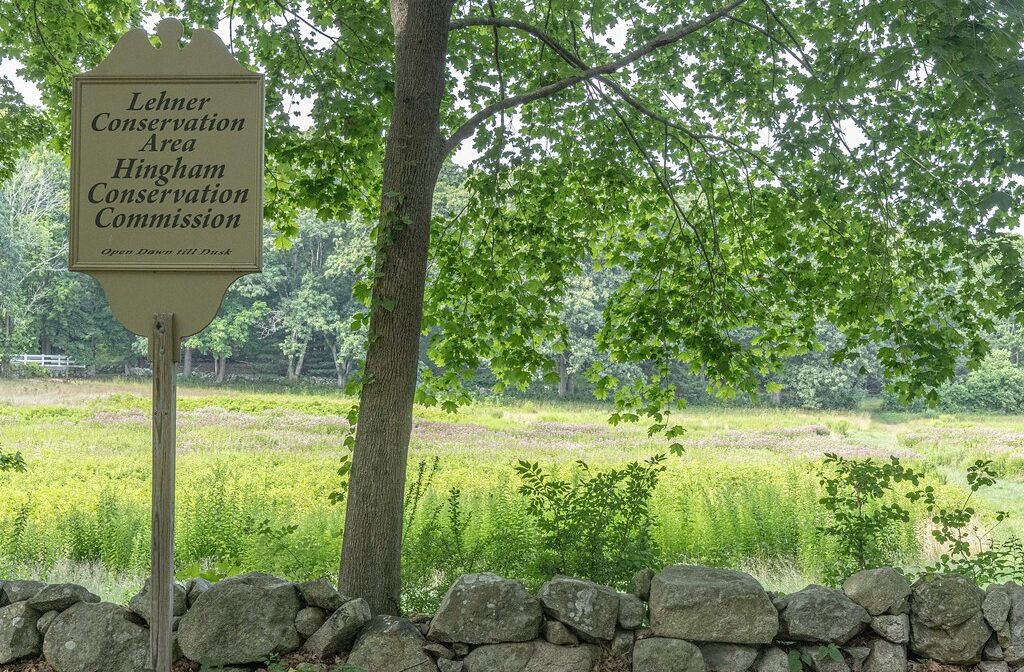
The Lehner Conservation Area in Hingham features grasslands, mixed forest, wetlands, and streams, with trails. It is directly adjacent to Jacobs Meadow. The two properties are connected by a trail.
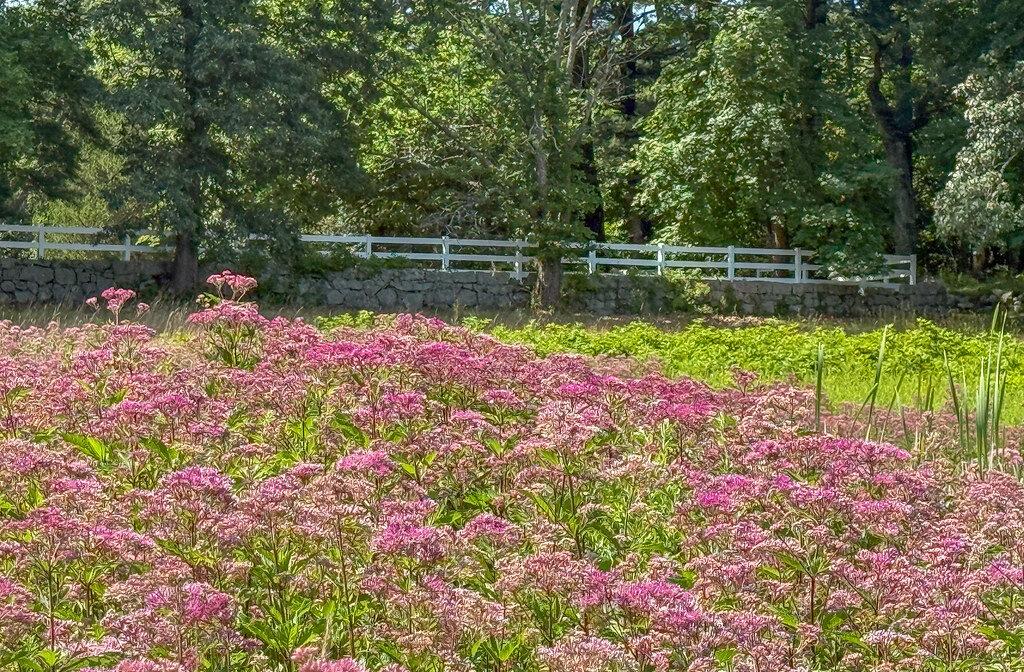
Jacobs Meadow features 1.8 miles of trails through woodlands and meadows, with several old stone walls, plus a view of Fulling Mill Brook.
Hunting is not allowed on these properties.
Features
The Lehner Conservation Area is also known as Potter’s Field. It was once the town burial ground for paupers and unknown individuals. Hans Lehner purchased the property in the 1920’s. His son Philip, who passed away in 2013, was the most recent owner. The family opted to sell a portion of the land to the town. Community Preservation funds made this possible, and the land was acquired for conservation in 2017.
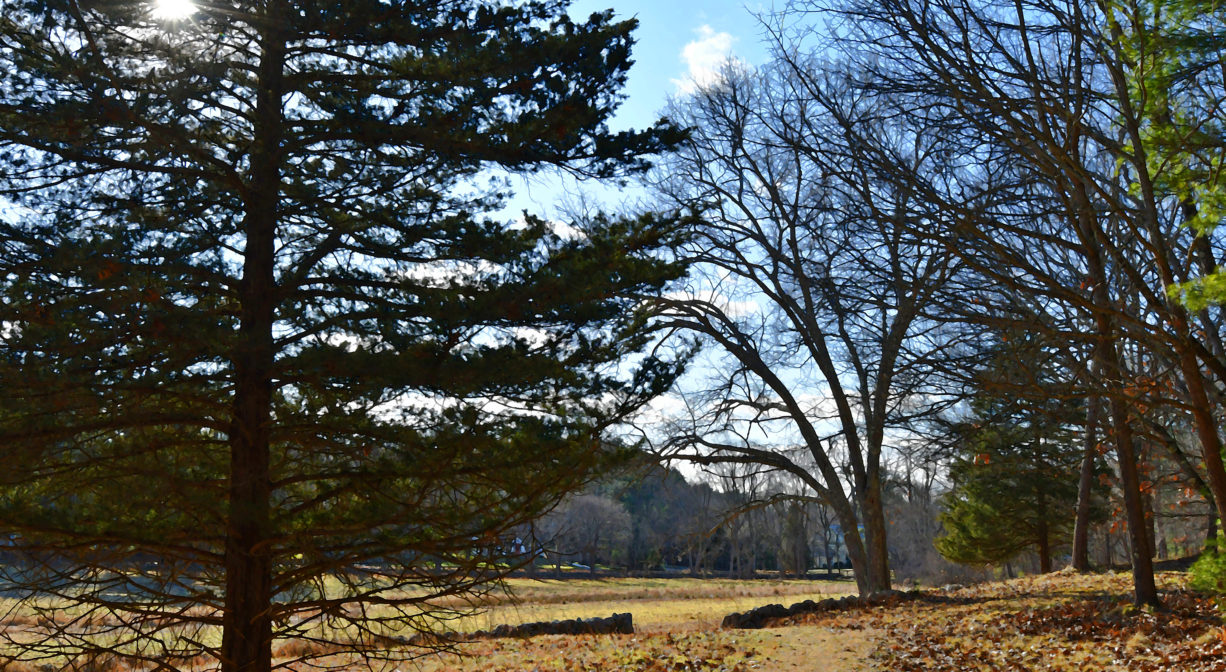
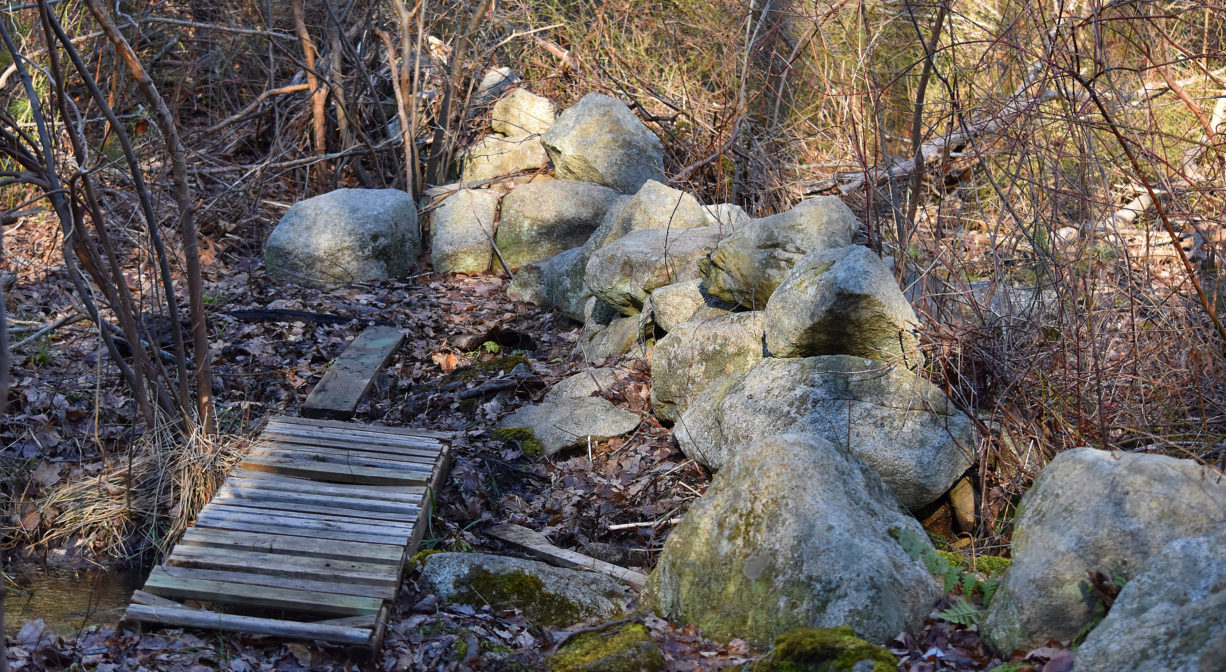
Some interesting things you might see while you’re there include an old stone bridge in the middle of the field, an esker ridge and vernal pool in the woods, lichen-covered stone walls , and the occasional glacial erratic boulder.
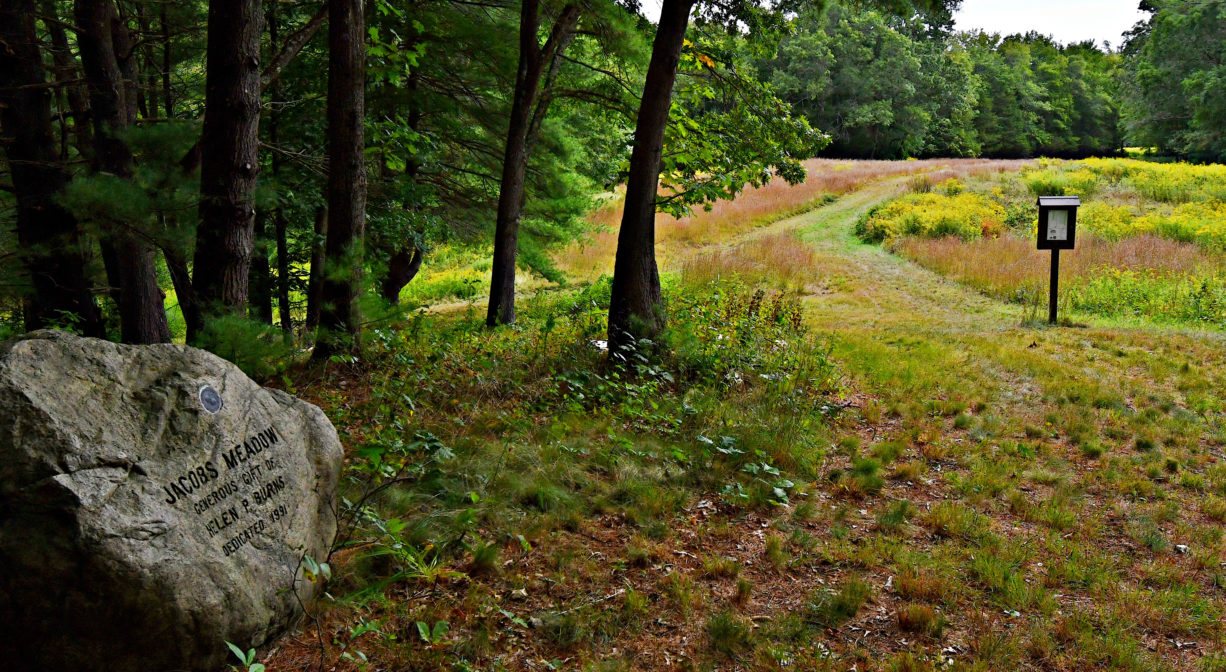
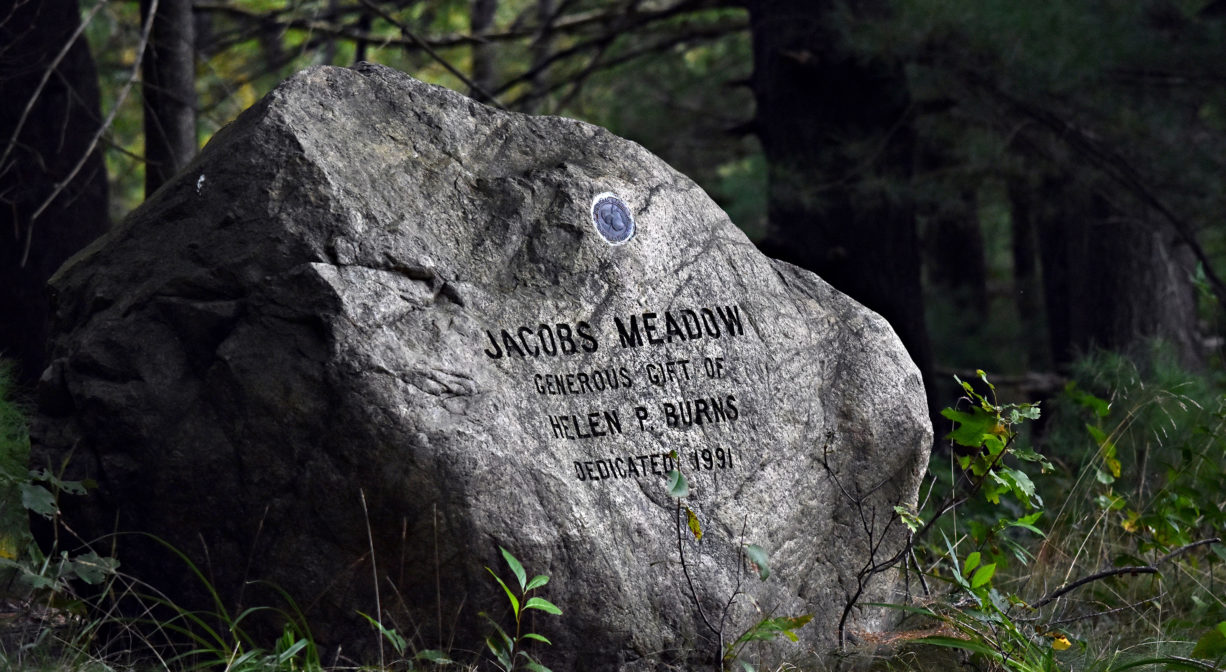
Lehner Conservation Area is directly adjacent to another conservation property, Jacobs Meadow, owned by the Hingham Land Conservation Trust. Most of Jacobs Meadow was donated to the Town of Hingham, and to the Hingham Conservation Land Trust, by Helen Burns. The town purchased additional acreage from abutters. Additional land donors include the Goodlatte Family, Richard & Virginia Kurtzman, and Robert & Carolyn Garvie. Please be mindful of private property.
According to the Hingham Land Conservation Trust, Jacobs Meadow is also known as Glad Tidings Plain. It has long been associated with the family of Nicholas Jacob, who immigrated from England and settled in Hingham in 1633. (The “s” was added to the family name a few generations later.) Members of the Jacobs family became toolmakers, blacksmiths, millers, and farmers. Glad Tidings Rock, located on the property, marks the site of the ambush of John Jacobs during King Philip’s War.
This land is within the region of the Massachusett (or Massachuseuk). To learn more about local Native American tribes, we encourage you to interact with their members. The Massachusett tribe at Ponkapoag shares information on its website.
Trail Description
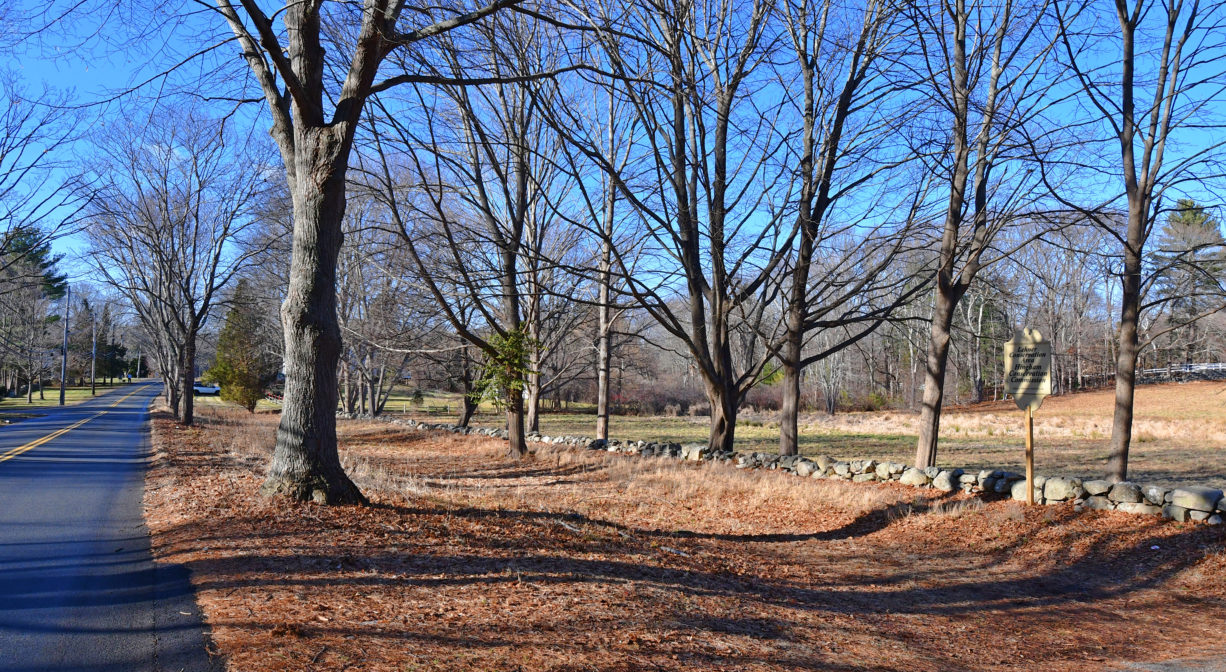
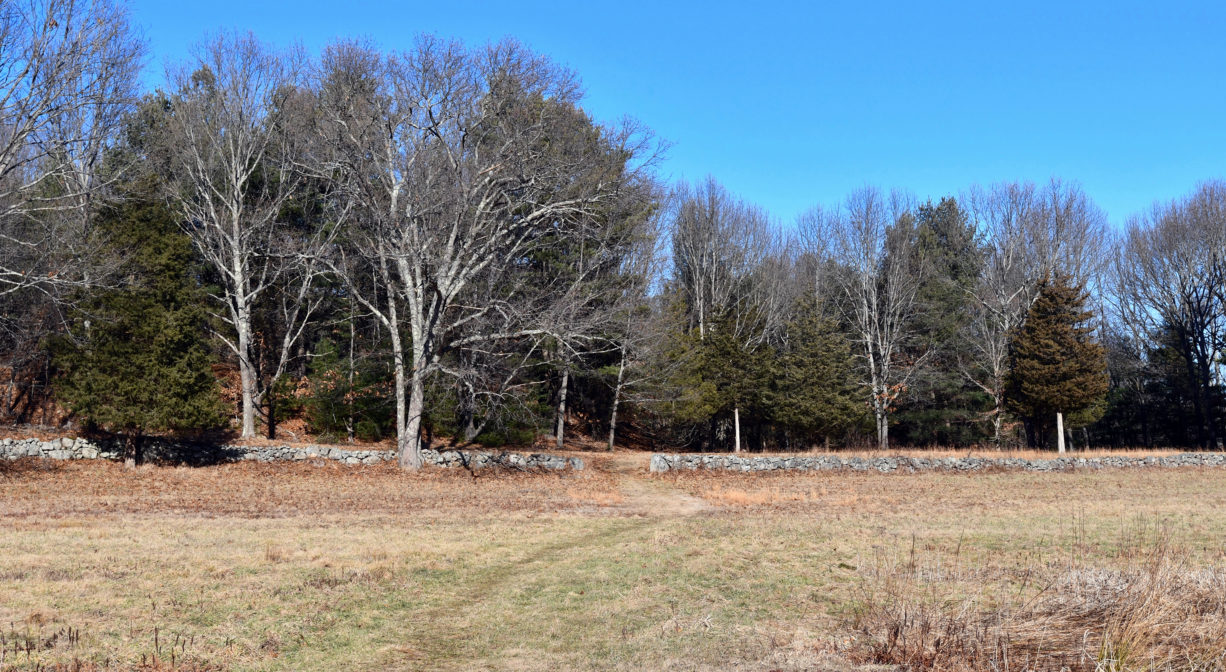
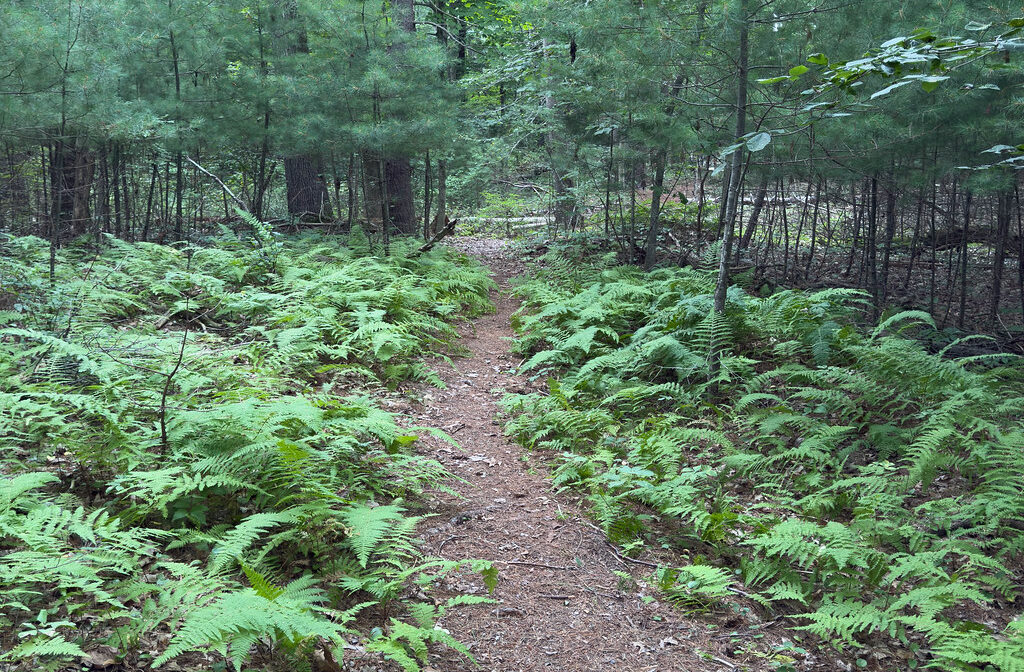
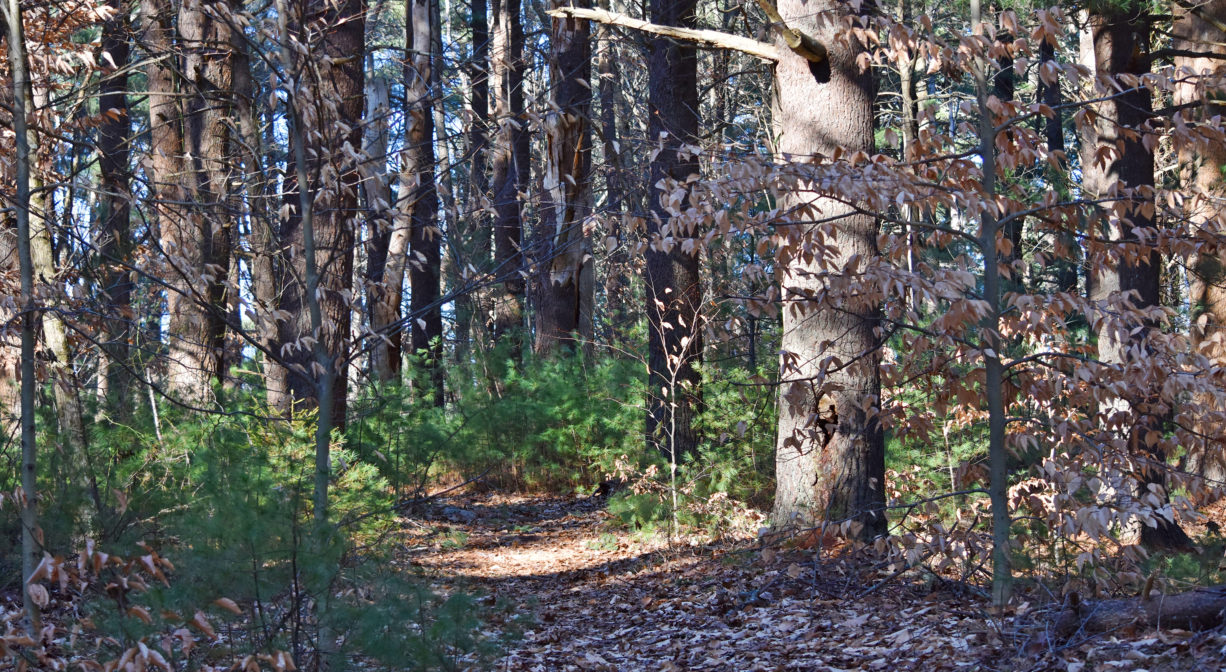
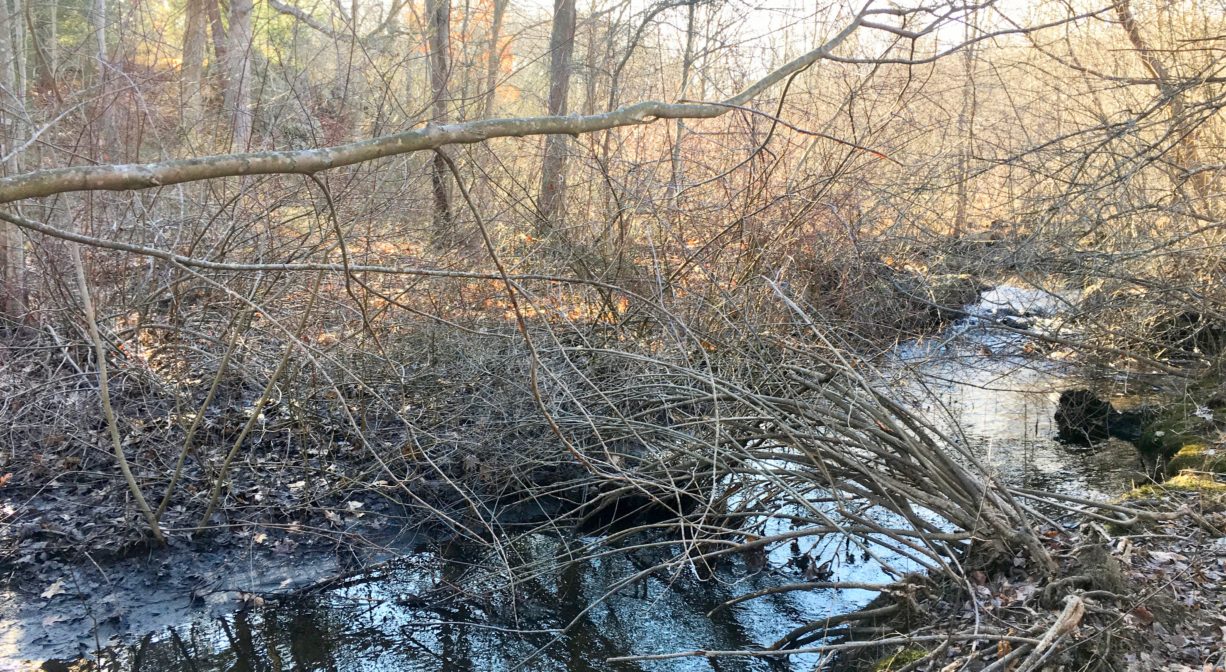
From the roadside parking area at Lehner Conservation Area, follow the trail across the open field, into the woods. There is a loop to the right that crosses over a tributary to Fulling Mill Brook a few times, and continues around to a trail intersection on the boundary with Jacobs Meadow. Turning left at the sign will bring you back through the woods to the open field. This loop is about 0.8 miles in total. Some trails on this property are narrow; others are old, wide roads. There are several old stone walls, both in the woods and along the edges of the field.
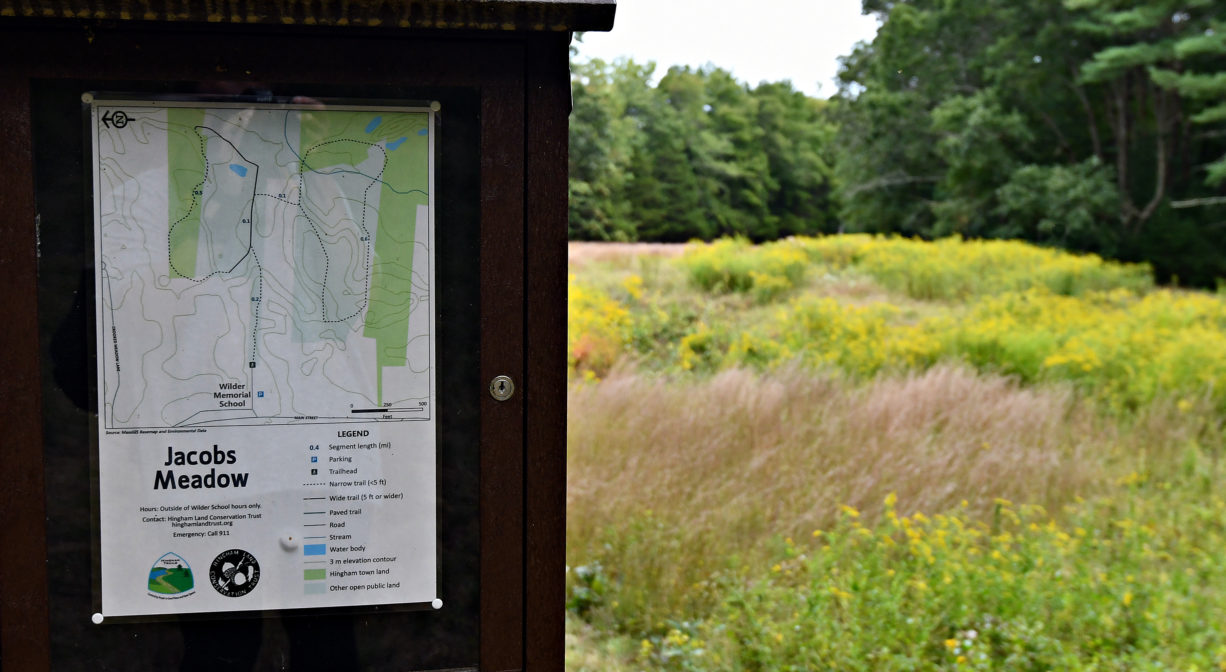
Additional access is available on weekends and after school hours via a trail behind the Wilder Memorial Building (666 Main Street) . The trail leads into the woods, and shortly thereafter, to a large meadow. There are loop trails to the north and south. The meadow offers easy, relatively flat walking, while the forest trails are narrower, with occasional small hills. The same 1.8-mile trail network can also be accessed through the Lehner Conservation Area. A kiosk marks the property boundary. Some of the trails in the woods are marked with white blazes, others are marked with wooden posts, and some are not marked at all.
Visit the Hingham Conservation Land Trust’s website for a detailed description of the 1.8-mile Double Loop walking route.
Habitats and Wildlife
At Lehner, the forest is composed of oak, pine, cedar, maple, birch and beech, with wild grapes, greenbrier, ferns, hemlock and bittersweet. Watch out for poison ivy! The open field has some wet areas, due to the presence of a headwater wetland. Other wetlands can be found within the forest, alongside the stream. In the winter, look for bright red winterberry, a common food for birds and small mammals, as well as cattails. Both typically grow in wetlands.
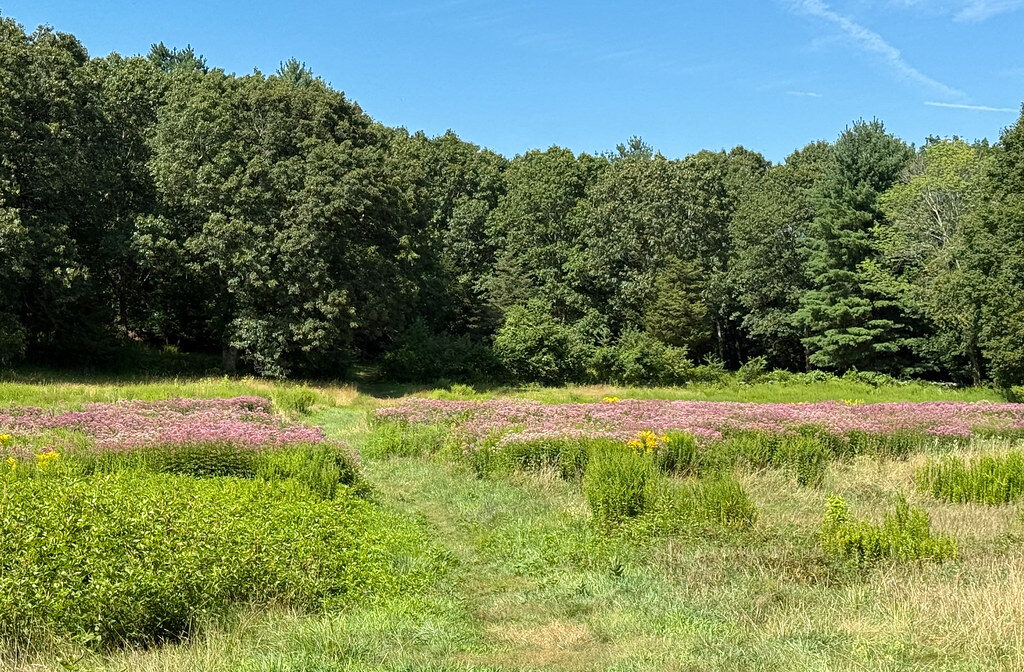
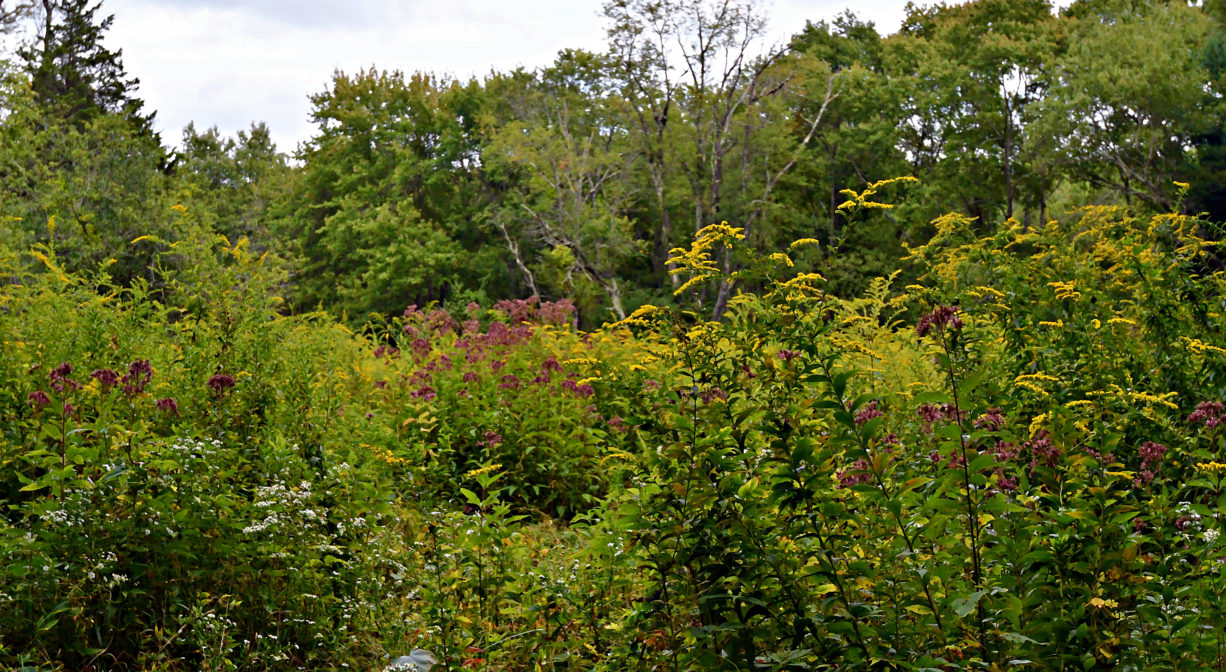
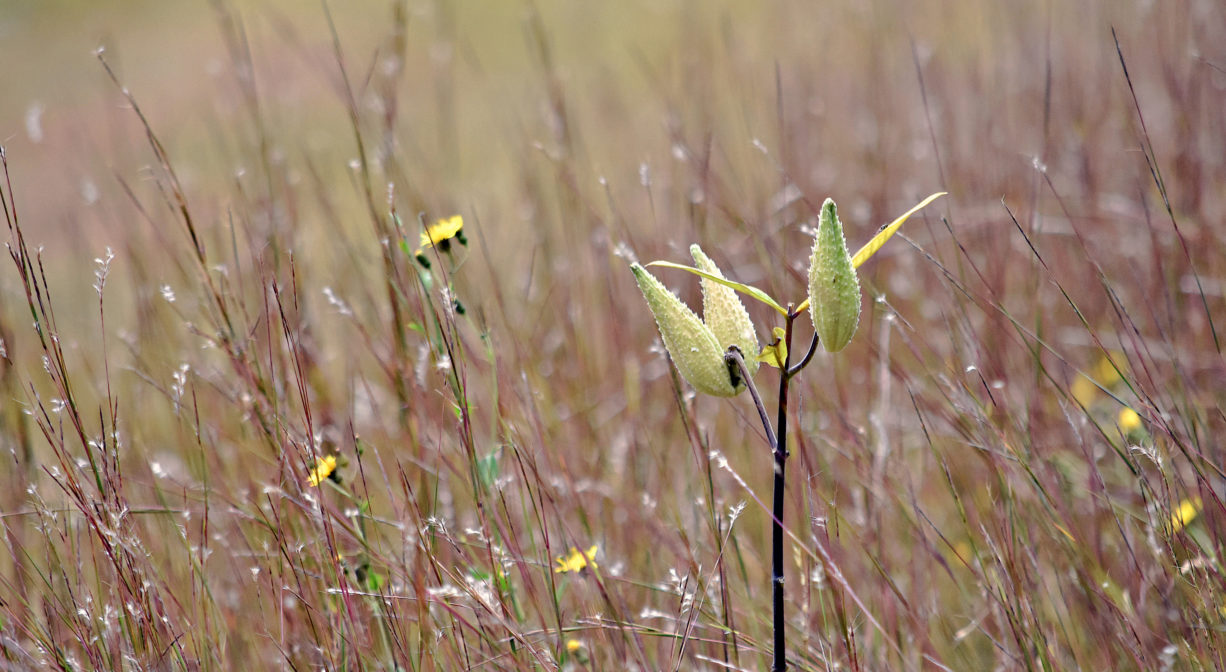
Open meadows are the centerpiece of the Jacob Meadows property. They are bordered by woods and wetlands on both sides, offering a pleasant sense of seclusion. Most of the forest is pine and oak, but there are some lovely groves of cedar and beech, plus holly and maple. Plenty of greenbrier too! There are some glacial erratic boulders as well.
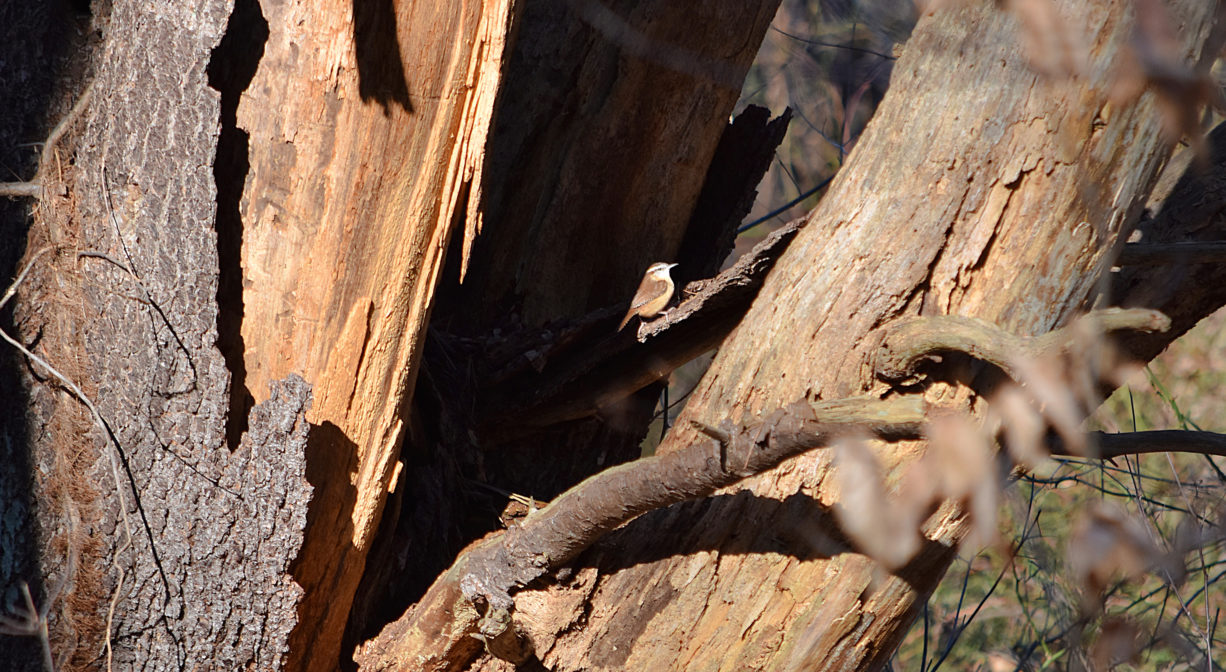
Deer and coyote have been spotted on these properties, along with turtles, fox, turkeys, and quite a few birds.
The streams and wetlands on this property flow into Fulling Mill Brook, a major tributary to the Weir River. The Weir River flows north through Hingham, with Tower Brook and Accord Brook joining it in its first mile. It gradually turns northeast and flows for another 1.4 miles, through Weir River Farm and eventually into Foundry Pond. The Weir River Estuary, designated by the Commonwealth of Massachusetts as an Area of Critical Concern, begins just below the manmade dam at the pond. The mile-wide estuary — with numerous acres of undisturbed salt marsh — forms the border between Hingham and Hull, and empties into Hingham Bay. We encourage you to follow and support the Weir River Watershed Association.





Historic Site: No
Park: No
Beach: No
Boat Launch: No
Lifeguards: No
Size: 106 acres
Hours: Dawn to Dusk.
Parking: Limited on-site parking at 32 South Pleasant Street. On weekends and after preschool hours, parking also available behind the Wilder Memorial Building at 666 Main Street in Hingham.
Cost: Free
Trail Difficulty: Easy, Medium
Facilities:
Informational kiosk, benches.
Dogs: Dogs must remain on leash. Always clean up after your dog!
Boat Ramp: No
ADA Access: No
Scenic Views: Yes
Waterbody/Watershed: Fulling Mill Brook (Weir River watershed)