81 Jacobs Lane, Norwell, MA
Norwell Historical Society: 781-561-1161
Owned By: Town of Norwell
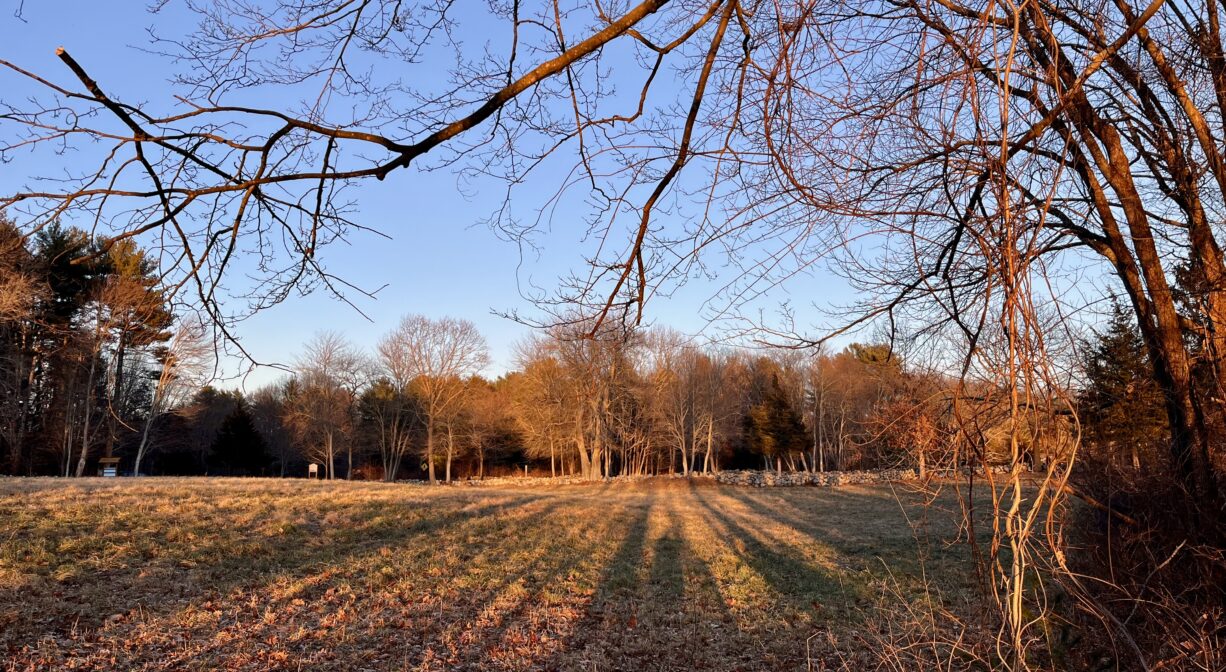
The Joshua Jacobs Homestead is located at the edge of Jacobs Pond in Norwell, immediately adjacent to the Jacobs Pond Conservation Area. A 0.3-mile trail extends from the parking area, along the shore of the pond, to the Jacobs Homestead, with views of agricultural fields and outbuildings.
Hunting is not allowed on this property.
Features
According to signage on site, David Jacob was the first member of the family to move to this area. He and his two sons, Joshua and Joseph, erected a dam on Third Herring Brook in the mid-1720’s, to power grist and saw mills. As a result, Jacobs Pond was formed. (Because it was formed by placing a dam on a stream, Jacobs Pond is actually an “impoundment,” as opposed to a natural pond.) You can see remnants of the mills across Main Street, near the entrance to Woodworth Memorial Park.
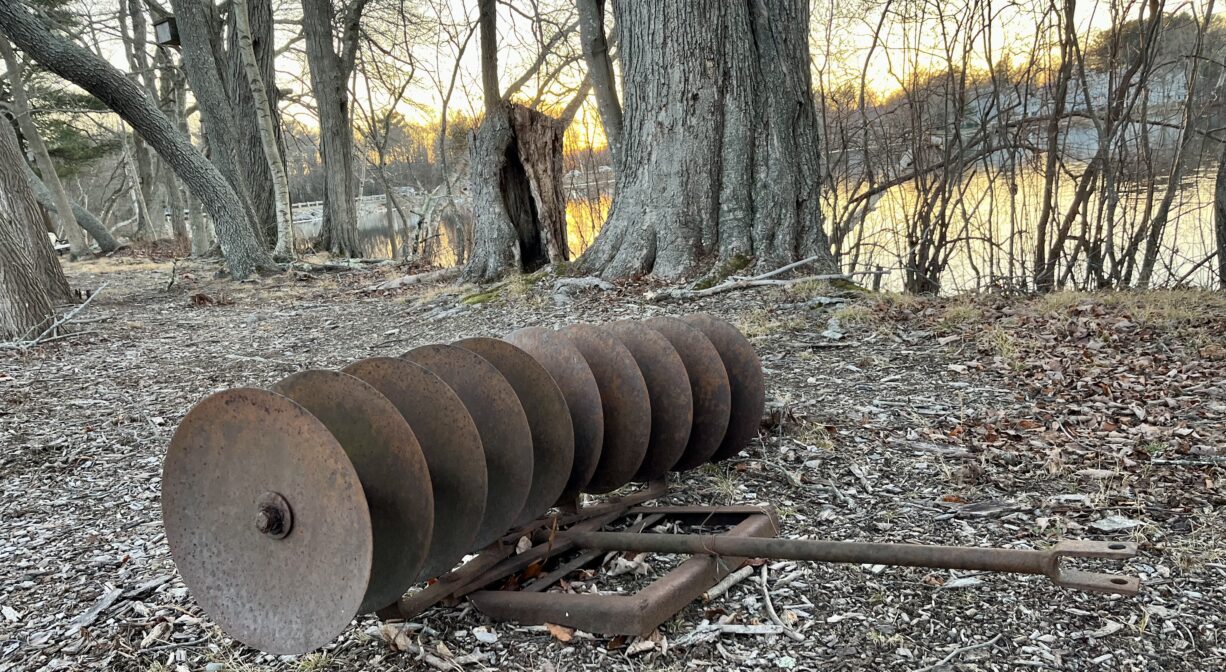
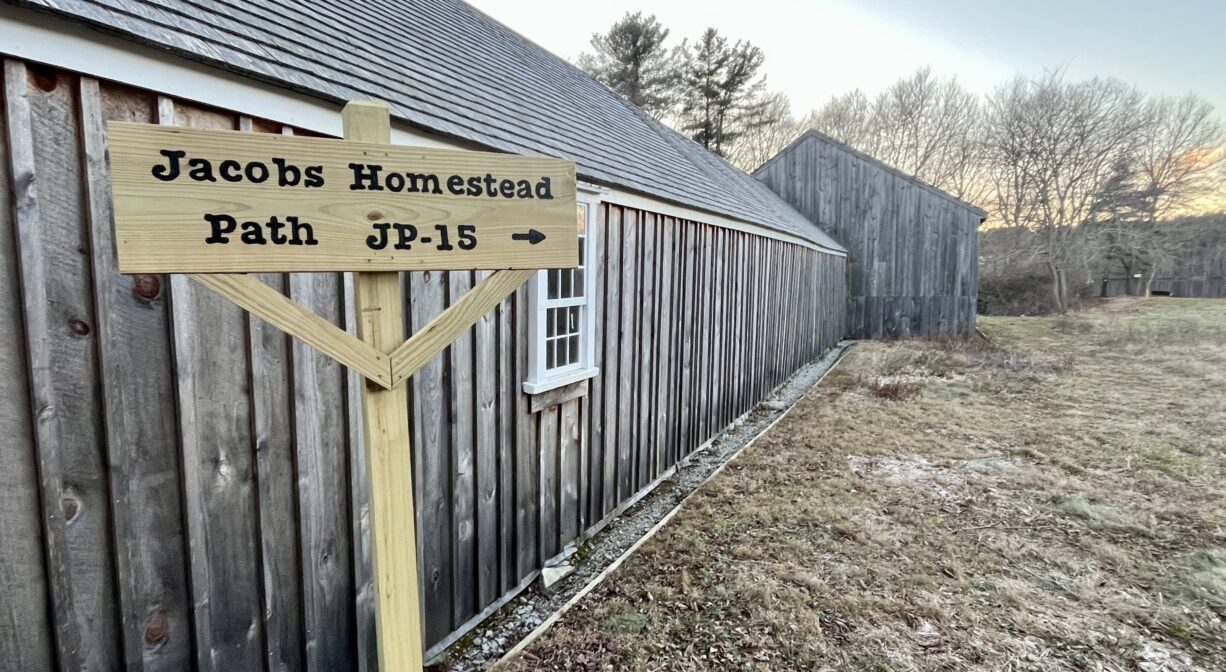
The Jacobs family purchased more than 200 acres of land in this area, taking advantage of its valuable timber. Around 1726, Joshua Jacob built a home by the pond. Around 1840, a second structure was added, and through the years, additional rooms were constructed to accommodate the growing family. Over time, the family name evolved from Jacob to Jacobs. Seven generations of the Jacob/Jacobs family inhabited this farmstead and maintained the property. In 1896, it passed to Dr. Henry Barton Jacobs, who upon his death, left the estate to the Society for the Preservation of New England Antiquities. The Town of Norwell purchased the entire property — the fields, the buildings the and pond — in the 1980’s with the stipulation that it be properly maintained by the town and open to the public in perpetuity. Learn more about the farmhouse in this video from Norwell Spotlight TV.
This land is within the region of the Massachusett (or Massachuseuk) Native American tribe. For thousands of years, the land today known as Norwell was inhabited by indigenous people who grew crops, foraged, hunted, and fished in the Assinippi and North River areas. The name Assinippi, from the Algonquian language, is interpreted to mean “rocky water. Circa 1617, a major outbreak of disease decimated an estimated 90% of the native population in New England. Descendants of these original inhabitants are living here today. They are known as the Mattakeesett Tribe of the Massachusett Indian Nation, the Massachusett Tribe at Ponkapoag, the Herring Pond Wampanoag, and the Mashpee Wampanoag tribe.
Trail Description
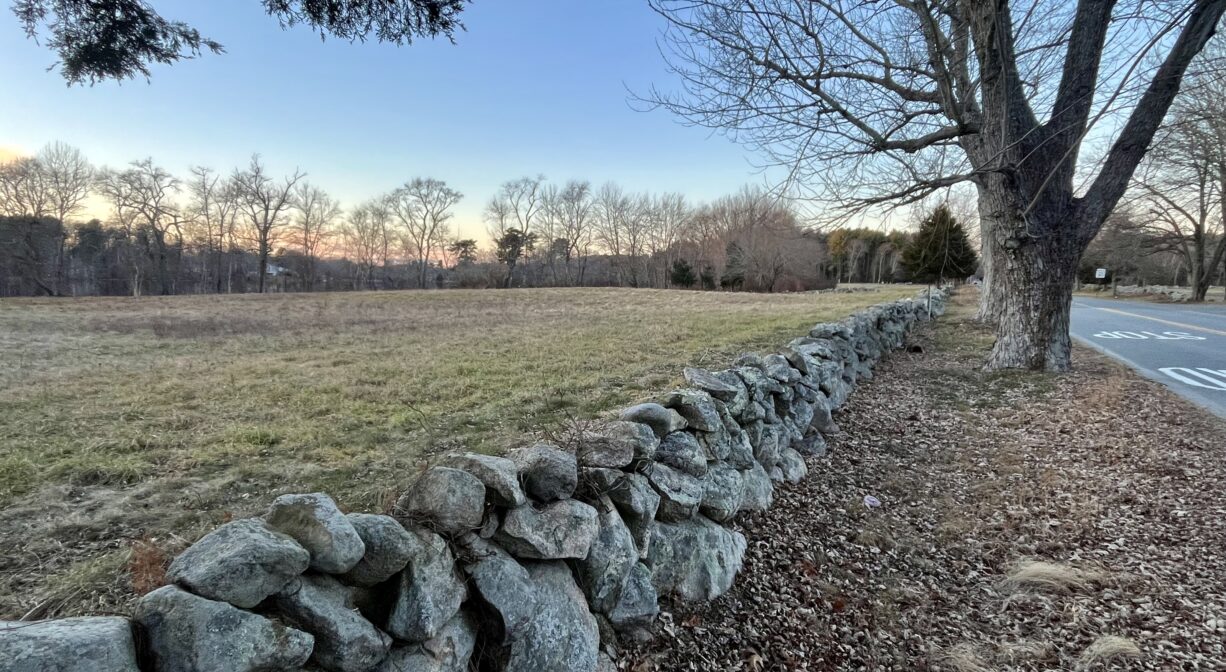
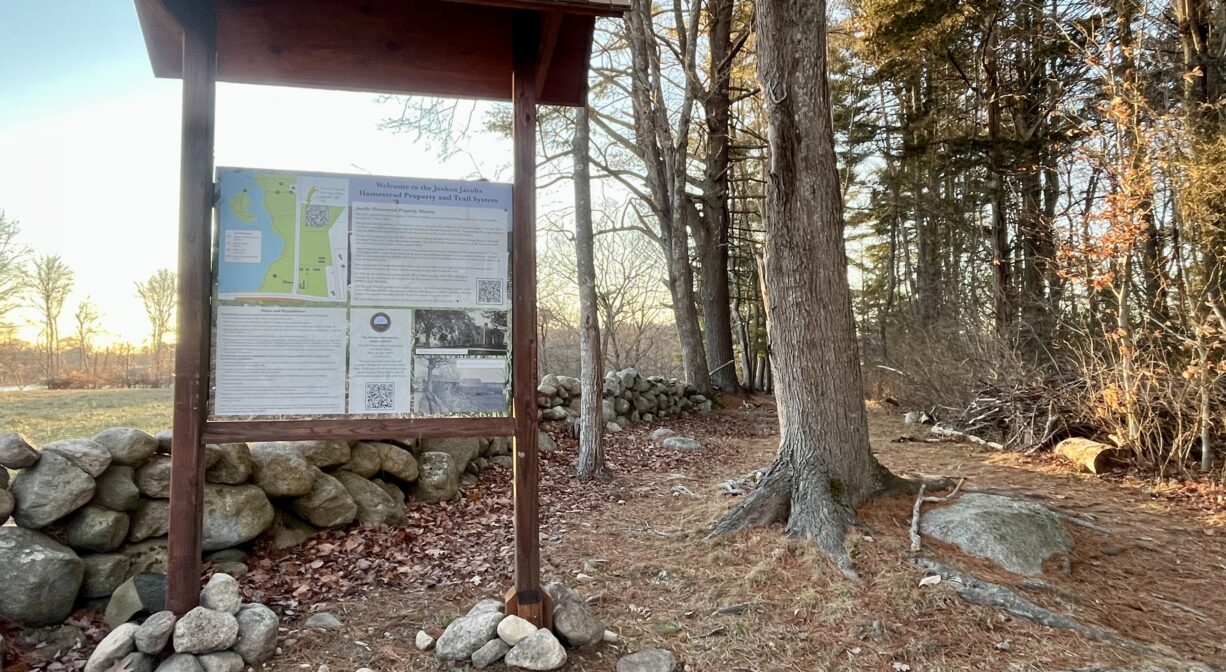
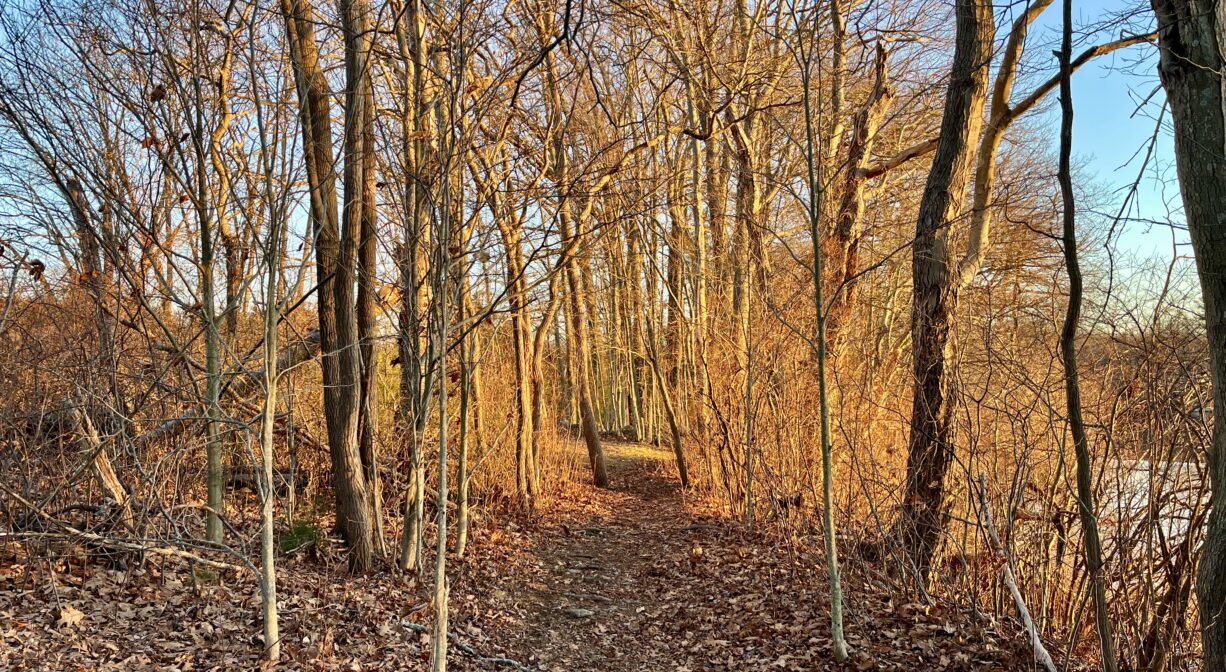
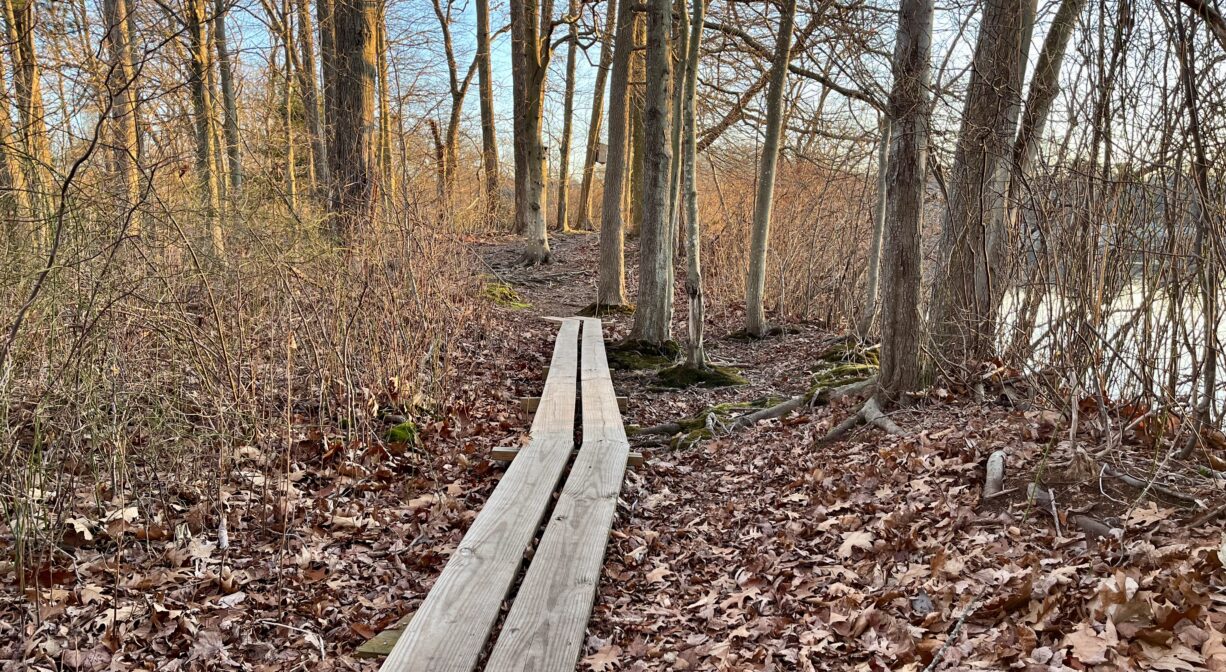
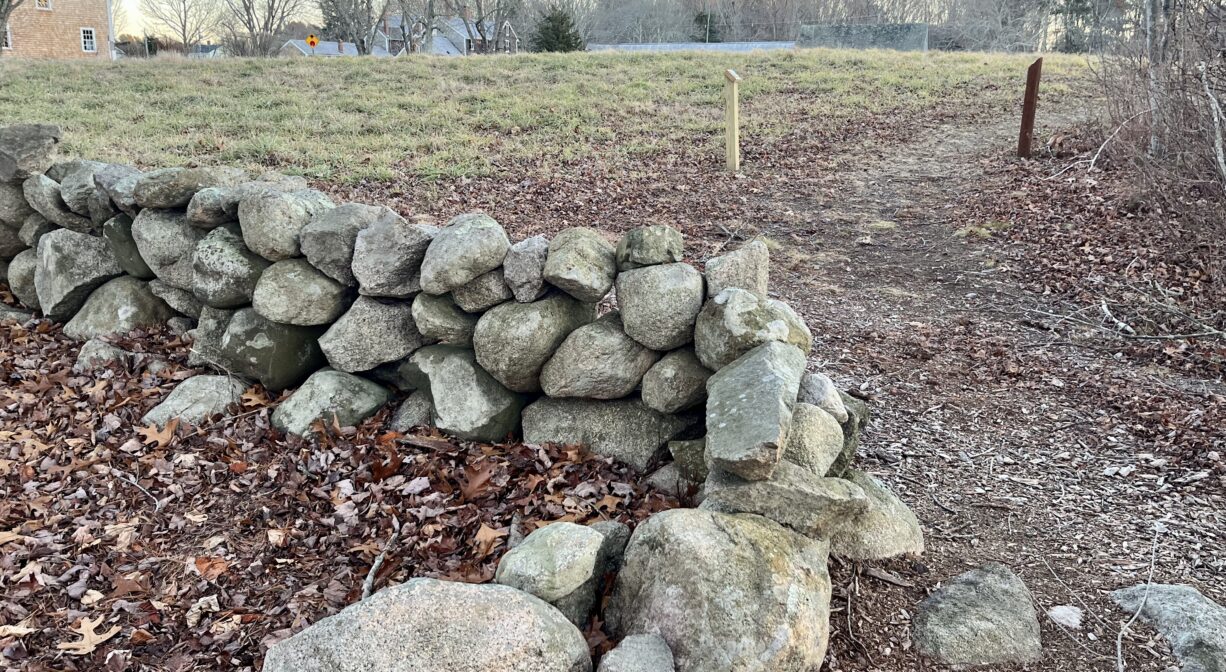
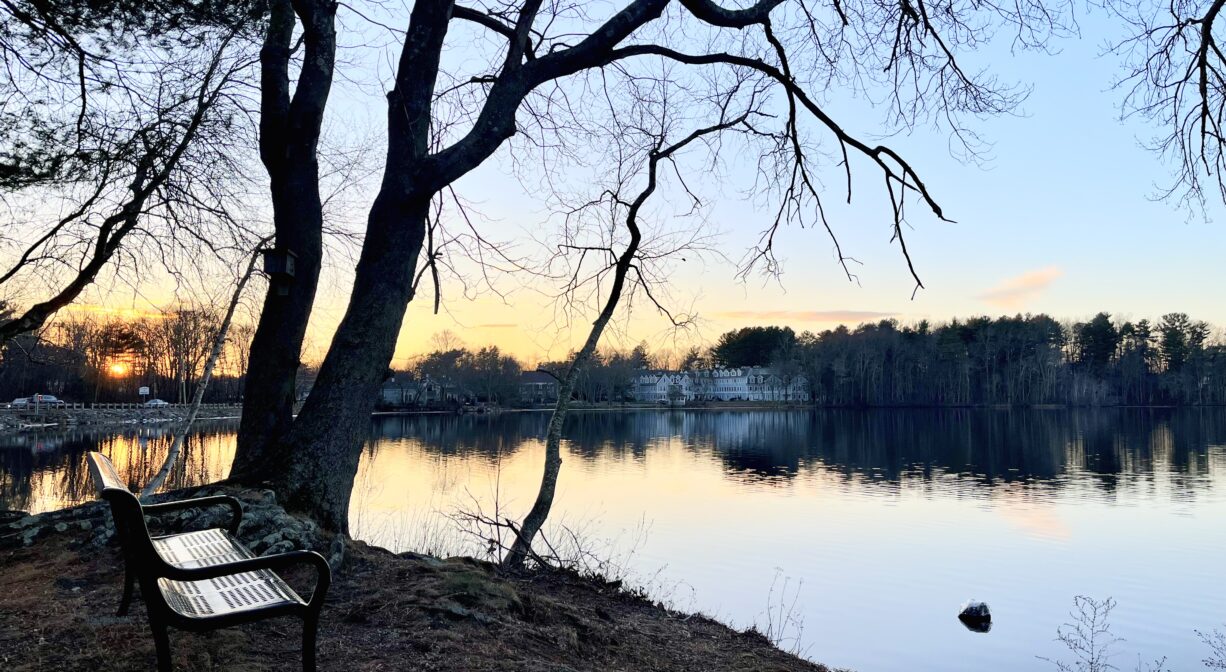
Look for the trailhead in the southern portion of the parking area. A short forest trail leads past an informational kiosk to an intersection by the pond. Turn left to access the Pond Trail (J3). It extends for 0.3-miles past a large beech tree, alongside the pond, through a narrow forest buffer, and beside well-maintained agricultural fields, ending at an outbuilding that is part of the Jacobs Homestead. The terrain is sometime uneven and rooty. Occasional bog boards provide passage over wet areas. Along the way are numerous spots for fishing, with views of the water and the island within the pond. You’ll also see old stone walls and other indications of the property’s agricultural history. There is a bench with an outstanding view toward the end of the trail near Route 123/Main Street.
Habitats and Wildlife
Jacobs Pond was formed when Third Herring Brook was dammed for industrial purposes in the 1700’s. The forest buffer beside the pond contains beech, birch, and oak trees.
The headwaters for Third Herring Brook are located north of Jacobs Pond, in the southern portion of Valley Swamp. Third Herring Brook exits the pond from the southern side, at the dam. The brook forms the border between Norwell and Hanover, and flows into the North River downstream of the old stone bridge on Washington Street.
The North River rises from marshes and springs in Weymouth, Rockland and Hanson. It is approximately 10 miles in length, with its source at the confluence of the Indian Head River (Hanover) and Herring Brook (Pembroke). From there it flows through the towns of Hanover, Pembroke, Marshfield, Norwell, and Scituate to the Atlantic Ocean between Third and Fourth Cliffs, draining approximately 59,000 acres along the way.
Between Jacobs Pond and Historic Sylvester Field in Hanover, there aren’t many public places to view Third Herring Brook, but it’s exciting to consider everything that has been happening there lately! Since 2014, NSRWA has worked with federal, state, and local officials to remove three dams from the brook. As a result, water quality has improved and wildlife habitat has been restored. The three dams were originally constructed to provide water power to sawmills and grist mills.
Since 2014, three obsolete dams have been removed from Third Herring Brook. All three dams were originally constructed to provide water power to sawmills. NSRWA worked with federal, state, and local officials to remove the dams. As a result, water quality has improved and wildlife habitat has been restored. We are watching closely with the hope of seeing brook trout and river herring return to their now-restored habitat.
Locations of the dam removals:
• The Mill Pond Dam, located behind today’s Hanover YMCA, dates back to about 1690, and was originally built by the Curtis family. Later owners were T. J. Gardner and Samuel Church, who operated both a sawmill and a grist mill on site. The last mill building burned down in 1937. After a partial collapse of the dam in 2001 and a breach of the dam in 2010, the NSRWA and the Hanover YMCA worked together to raise funds for removal of the dam. It was removed in 2014 — the first dam removal in our watershed!
• The Tack Factory Pond (or Tiffany Pond) Dam, located on Cardinal Cushing School property, was established in the 1670s by Charles Stockbridge for a grist mill. Later Recompense Tiffany took over operations, and the mill pond was named for him. In 1834, Zephaniah Talbot and Samuel Salmond established a tack factory on site. The factory building remained in use into the 20th century. According to Joseph Merritt’s History of South Scituate-Norwell, Samuel Salmond Sylvester owned it in 1938. The factory burned down in 1983, and the dam was removed in 2016.
• The Peterson Pond Dam, located behind the former (1976-2016) site of the Hanover Mall Cinema, was established on a mill privilege originally associated with John Clapp, who operated a sawmill there in 1653. The last mill was torn down around 1918. The current property owner, Hanover Crossing, opted to remove the dam in 2020, as part of the Hanover Mall redevelopment project.
• The dam at Jacobs Pond is still in place, and unlikely to be removed, but we are working with federal, state and local officials to install a fish ladder there.
At Jacobs Pond, the pond and conservation area provide habitat for small mammals, fish, turtles, frogs and birds. Common fish found here include chain pickerel, yellow perch, calico bass, and largemouth bass. Listen and watch for toads, turtles, and a variety of frogs (bullfrogs, green frogs, pickerel frogs). You may see snapping turtles and northern water snakes too.
Sources: L. Vernon Briggs – History of Shipbuilding on North River, Plymouth County, Massachusetts (1889); Joseph Foster Merritt – A Narrative History of South Scituate-Norwell, Massachusetts (1938), and John Stetson Barry – A Historical Sketch of the Town of Hanover, Mass., with Family Genealogies (1853).
Historic Site: Yes
Park: No
Beach: No
Boat Launch: No
Lifeguards: No
Hours: Dawn to Dusk
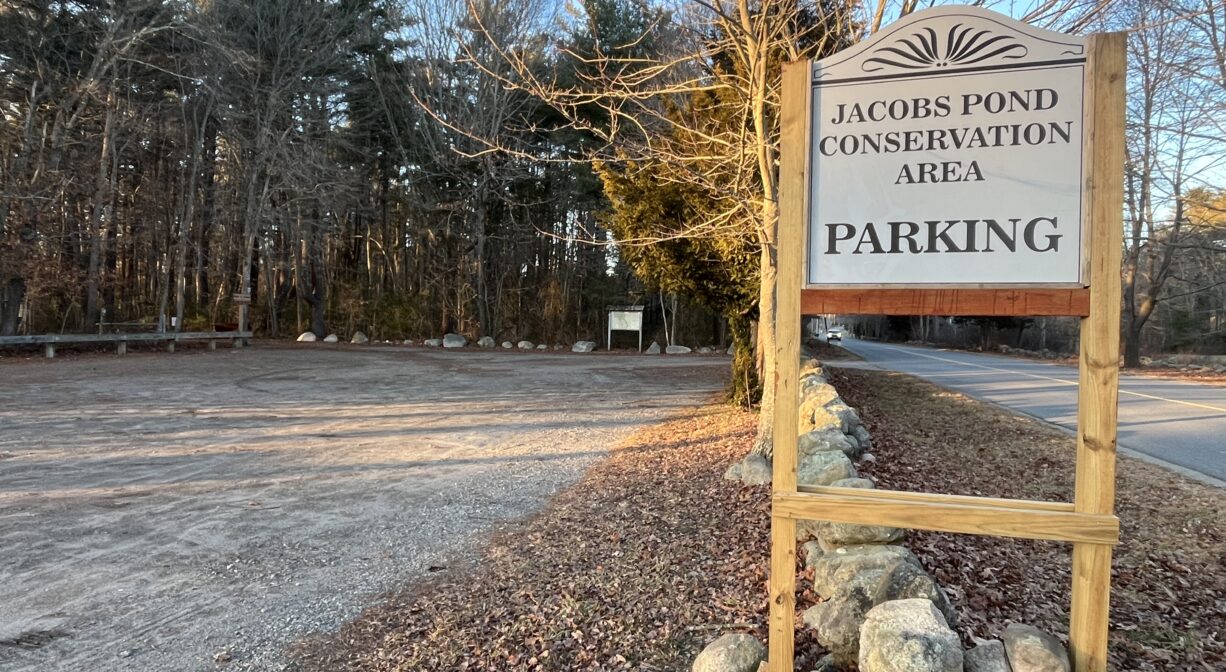
Parking: Ample on-site parking at 81 Jacobs Lane. The parking lot also serves the Jacobs Pond Conservation Area.
Cost: Free
Trail Difficulty: Easy
Facilities:
Informational kiosk, bench.
Dogs: Dogs must remain on leash. Always clean up after your dog!
Boat Ramp: No
ADA Access: No
Scenic Views: Yes
Waterbody/Watershed: Jacobs Pond / Third Herring Brook (North & South Rivers)