Have you seen blue mussels on our shorelines recently? Do you know of places that they used to be but have disappeared?
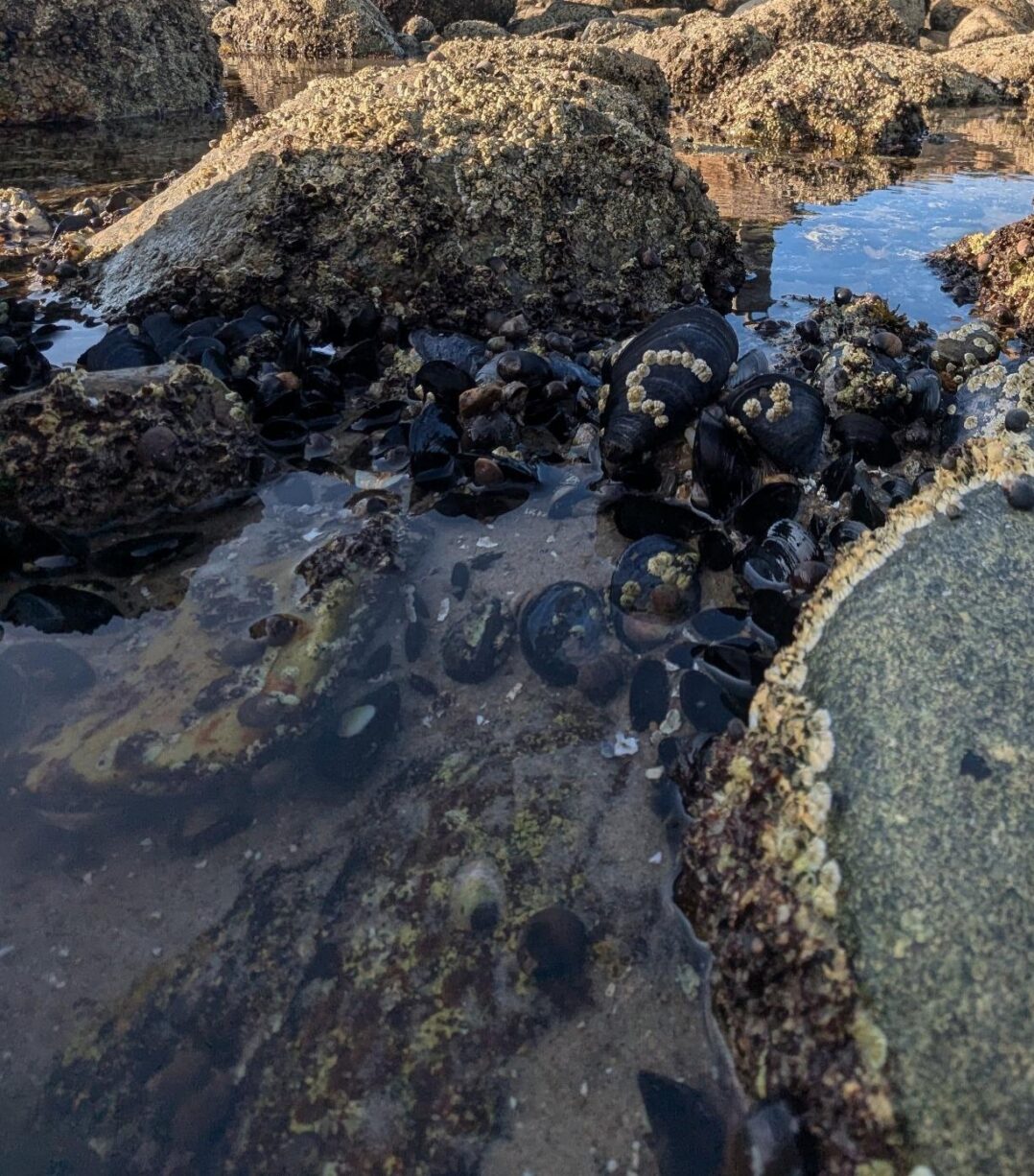
For decades, blue mussels (Mytilus edulis) were one of the most familiar sights on New England’s rocky shores, forming dense beds that supported a web of marine life. More recently there has been a dramatic population collapse, particularly in the Gulf of Maine. Survey data shows that intertidal coverage has plummeted from approximately 66% in the 1970s to less than 15% today, representing a collapse of more than 60% over 250 miles of coastline. Today, scientists have documented reductions of over 60% in mussel abundance, and in a few places almost total absence where thick beds once dominated.
Part of what makes these declines so concerning is that blue mussels are a foundation species, meaning they provide habitat and shelter for small marine creatures, serve as an important food source for shorebirds and fish, and act as natural filters that clean coastal waters. When mussels disappear, the entire intertidal community changes. Seaweeds and barnacles take over while important species lose critical habitat. Individual mussels can filter between 5 and 20 gallons of water daily, removing bacteria, heavy metals, and toxins, which improves water clarity and fuels microbial activity through nutrient deposition. Mussel beds create “biodiversity hotspots,” providing a stable matrix and heat stress refuge for diverse marine assemblages like crustaceans, worms, and algae
Researchers point to a variety of potential stressors driving this downturn. The Gulf of Maine is one of the fastest-warming areas of the global oceans. Rising air and water temperatures push mussels beyond their comfort zones, increasing stress and mortality. Invasive species like the European green crab also prey upon mussels that are already weakened by heat and other stressors. While long-running monitoring programs like NOAA’s Mussel Watch track contamination and health indicators in mussels, climate-driven changes and pollution remain an overarching concern for this foundational species.
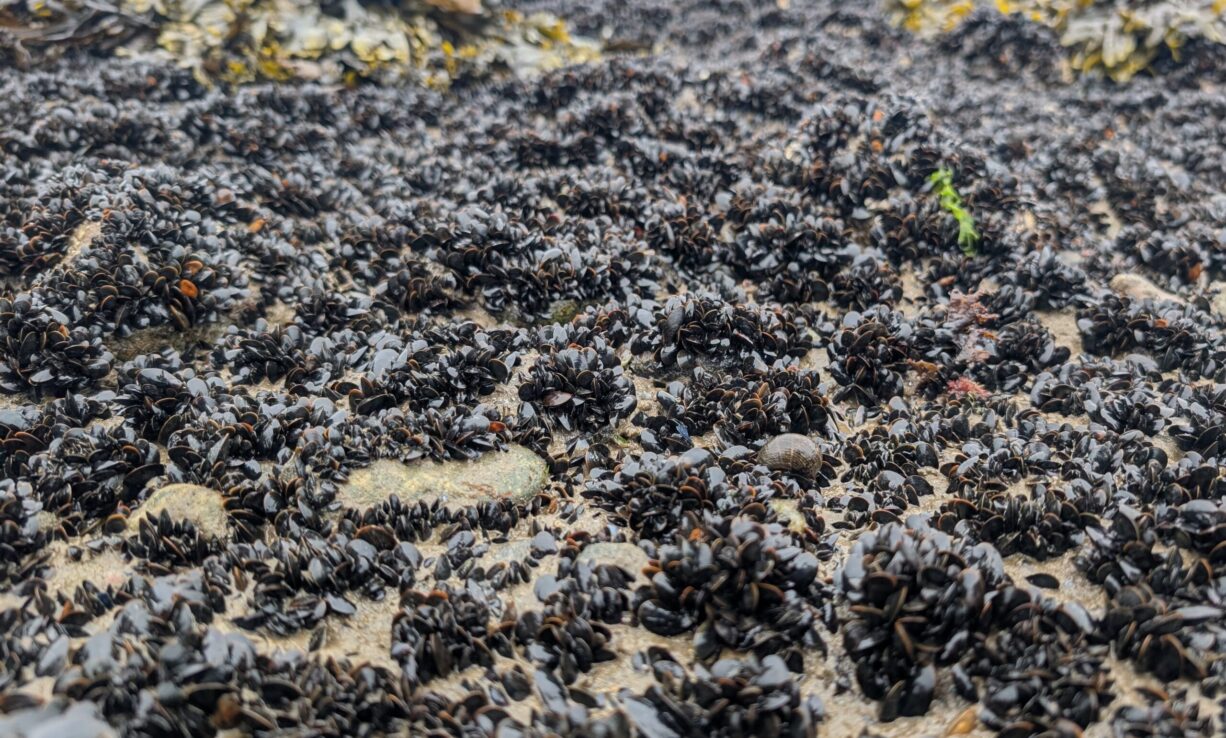
Now we are calling on our citizen scientists to help us track local changes. The five regions within the MassBays National Estuary Partnership are tracking blue mussel abundance across the state. While we have started to develop protocols and monitor the rocky shorelines to collect present-day data in each of the five regions, we’re looking to the MassBays network to provide YOUR mussel stories to help us better understand where mussels used to be historically.
Have you noticed mussels in your area?
If you’ve noticed a change in mussel abundance in the area, please consider taking this brief survey to tell us more!
Thank you to Salem Sound Coastwatch for developing this survey!