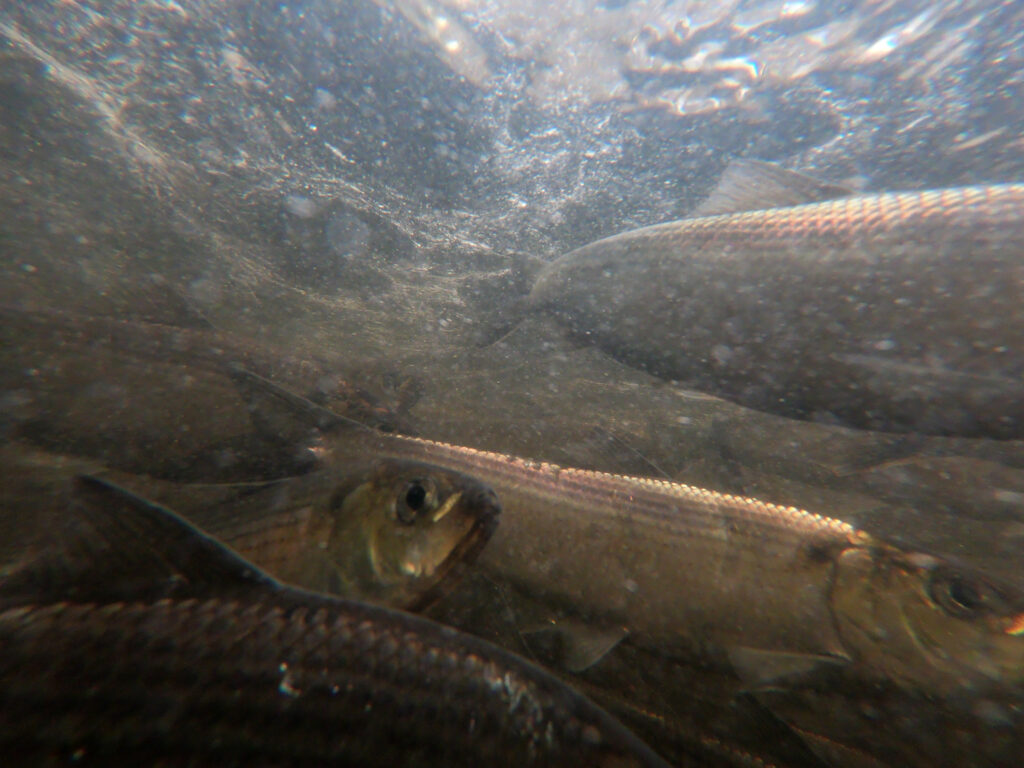
 Each spring, millions of river herring migrate into Massachusetts’ coastal waters to begin their annual migration up of our coastal streams and rivers. They are returning to the place of their birth, to spawn and create a new generation of river herring. River herring populations had declined sharply in the early 2000s. As a result, in 2006, the Massachusetts Division of Marine Fisheries implemented a ban on the harvest of herring. While the harvest ban was intended to reduce one stress on these fish, they still faced a series of threats including drought, changing climate, shifts in predation, and an inability to get to their spawning grounds due to dams or non-operational fish ladders. Herring are a crucial link in the coastal food chain, as a source of food for striped bass, bluefish, osprey, herons and other coastal species. Following the harvest ban, many rivers saw increasing numbers from 2012 to 2019. Unfortunately, declining and unstable runs were seen from 2020 to 2022. From 2023 to 2025 many runs bounced back strongly, including Herring Brook in Pembroke!
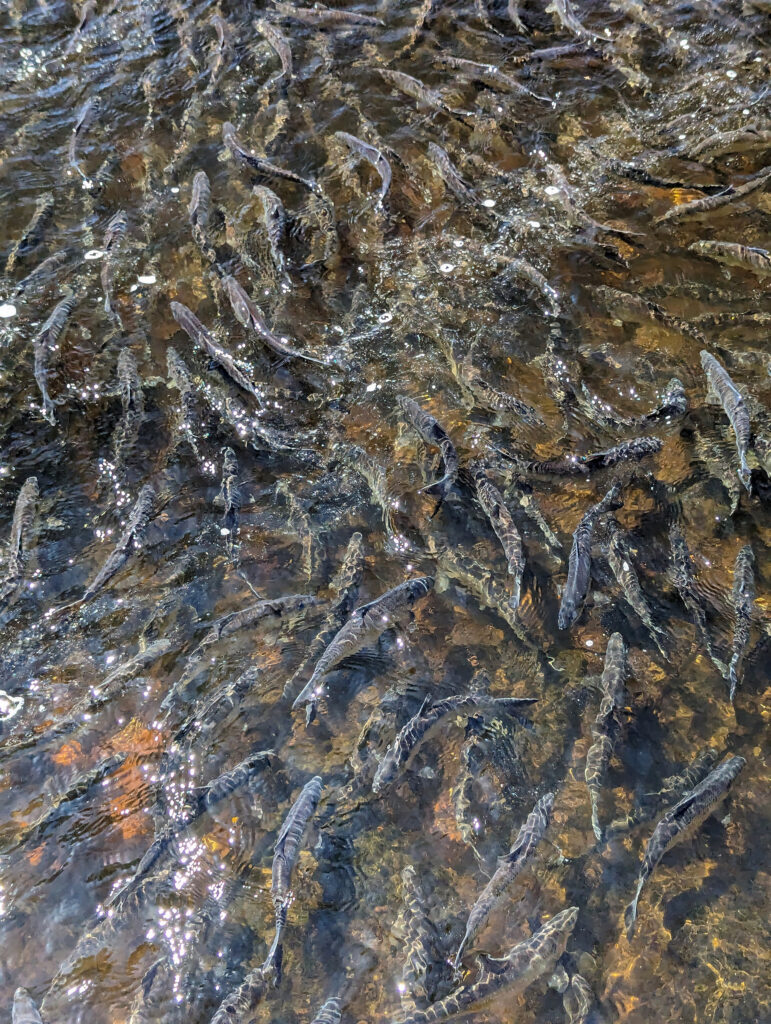 To help combat these problems, the North and South Rivers Watershed Association and MassBays National Estuary Partnership seeks volunteers each year from the late March through early June to count herring. The counting is done in 10-minute blocks, seven days a week, six to nine times a day, at up to five different locations. These counts will help us continue to monitor trends in our local herring population.
2026 should be an interesting one for our herring counts on several fronts. Foremost will be understanding the implications of the significant snowpack versus the persistent drought conditions (see our last eNews for details). Secondly, the Veterans Park dam and fish ladder are gone! The new channel has been constructed and all that’s left are some landscaping elements to complete the project. We’ll have a few challenges counting at this site, but we hope to document fish swimming up the new channel for the first time ever. Lastly, we are adding Island Creek in Duxbury to our volunteer count this year. For the past several years the Division of Marine Fisheries has moved migrating herring from Herring Brook in Pembroke to the headwaters of Island Creek in an effort to revive that run. The dedicated team at Island Creek hopes to track a successful return of fish this year.
All of these key data points would not be possible without the dedication of citizen scientists who participate in annual herring counts. So we call on you again this spring to be a critical part of this long-running monitoring program. Your help is needed to count herring at one of six sites throughout the watershed – it only takes ten minutes! You will choose one of three four-hour timeblocks (7am-11am, 11am-3pm, and 3pm-7pm) and count any ten minutes within those four hours. You can sign up for multiple times and multiple sites according to your schedule. Counts start on March 22nd in Pembroke and March 29th at all other locations and continue until May 30th at all locations except the South River (June 16th or slightly earlier).
Sign up to count at one or more sites here!
 For our past users, you’ll notice that this new scheduling system is a big improvement in that you are able to choose and manage time slots on your own.
-
- Herring Brook, Pembroke – Historically the highest population of herring in the watershed, it is a crucial site for tracking trends.
- South River, Marshfield – Dam removal is complete! This will be an historic year for tracking fish up the newly constructed channel.
- Bound Brook, North Scituate – Site of a 2017 dam removal, herring have only just started to return in small numbers.
- First Herring Brook, Scituate – We documented the consistent presence of herring here in 2024 and 2025. We’re hoping that all this snow translates to good spring flows.
- Island Creek Duxbury – Used by Native Americans. The Island Creek Pond is 35-acres and has a stream flowing two miles into Kingston Bay thru the 7-acre Mill Pond over two fish ladders built in 2017, One ladder is in the stream near the IC Pond. The other at Rt. 3A. This run has been stocked for the past four years with herring from the Pembroke run.
- Note that we are pausing the Third Herring Brook count this year. We will be using some innovative new tools to look for fish in this system.
Several in-person training sessions will be held for new volunteers. These will be held at multiple locations. However, the methods are generic to all sites so you can attend any training regardless of the site you have registered to count at. Training sign-ups are included on the sign-up page. We will also post online training information as we get closer to the start of the counts.
Please join us in collecting important data that helps inform restoration in our watershed and helps us understand herring populations locally and regionally.