After shoveling out your driveway and watching snow persist in your yard for over a month, you might be wondering how we can possibly still be in a drought.
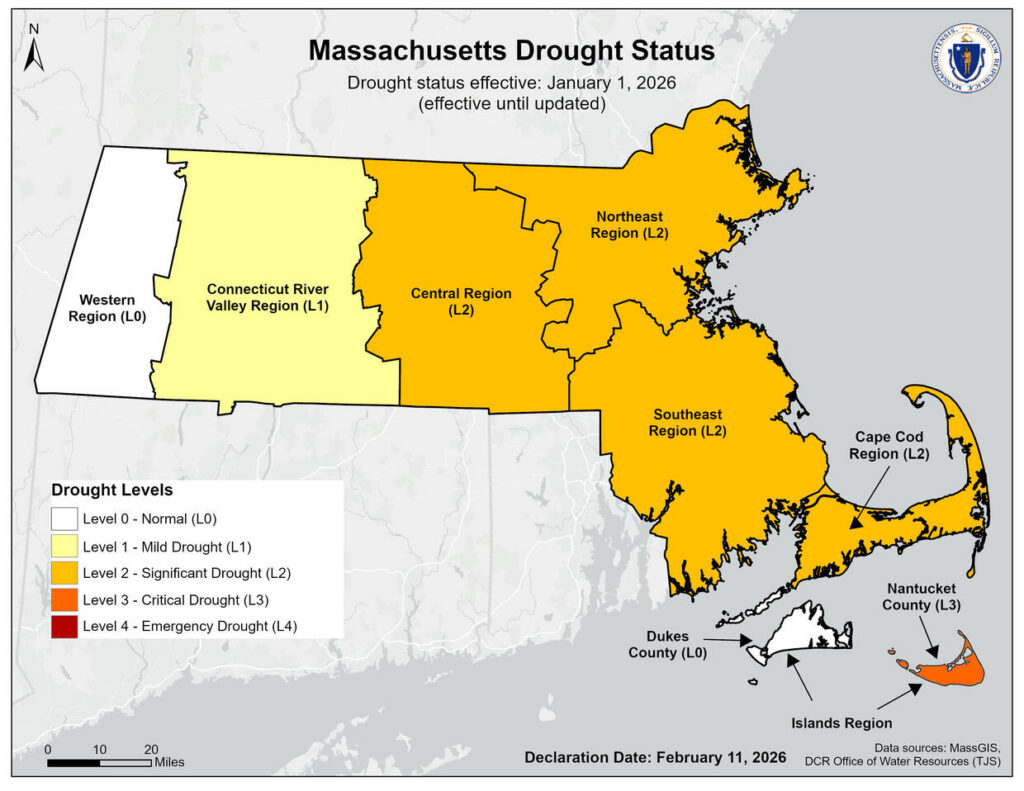 In Massachusetts, drought conditions are determined through a collaborative, data-driven process overseen by the Drought Management Task Force (DMTF). The state does not look at a single factor; instead, it evaluates six key environmental indices across seven different regions to decide if a drought exists and how severe it is. Those six elements are listed below with some notes on what they mean for us here on the South Shore right now:
- Precipitation: Using the Standardized Precipitation Index (SPI) to compare current rainfall/snowfall against historical data over various “look-back” periods (1–36 months). Despite the massive snowfall in January, our region has not received enough liquid precipitation over the long term to recharge groundwater and local water supplies. That light, fluffy snow didn’t translate into a lot of actual water content.
- Streamflow: Measuring the volume of water flowing in rivers and streams compared to historical medians for that month. All of that persistent snow hasn’t found its way into our local rivers. Although hopefully it will serve as a good source in the coming months.
- Groundwater: Checking water levels in a network of monitoring wells to see if underground aquifers are being recharged. As with streamflow, record cold temperatures and frozen ground have prevented snowmelt from occurring and soaking into the soil, limiting groundwater recharge and discharge to streams
- Lakes and Impoundments: Monitoring the water levels of reservoirs and ponds.
- Fire Danger: Using the Keetch-Byram Drought Index (KBDI), which estimates the dryness of the top eight inches of soil. This is not a key metric during snow-covered conditions we currently have.
- Evapotranspiration: Using the Evaporative Demand Drought Index (EDDI), which measures the “thirst of the atmosphere” or how quickly water is being pulled from the ground and plants. This demand is currently very low when plants aren’t growing in the winter, especially a super cold one like this.
Based on all these factors, the Massachusetts Drought alert for February 12th stated:
“In general, drought conditions have remained steady in nearly all regions of MA. While the Millers River Basin has improved, the Southeast Region [that’s us!] has worsened to a Level 2-Significant Drought. All other regions remain unchanged. Precipitation deficits since 2024 remain in spite of January’s significant snowfall. Record cold temperatures and frozen ground have prevented snowmelt from soaking into the soil, limiting groundwater recharge and discharge to streams. This has continued to cause low streamflow, decreasing water levels in lakes and ponds, and declining groundwater in nearly all regions.”
During a drought, the state task force recommends:
- Minimizing overall water use and being particularly mindful of indoor water use.
- Following local water use restrictions.
- Limiting or prohibiting washing of hard surfaces like sidewalks, patios, driveways and siding.
- Fixing any indoor leaks from toilets, faucets and showers, which can result in more than 60% of indoor water use.
- Monitoring total household water use shown on your water bill for sudden increases, which often indicate leaks.
- Conducting regular inspections of all pipes and fixtures, including those located in utility rooms, crawlspaces, and other hidden areas.
- Using dishwashers rather than handwashing dishes. Run the dishwasher only on a full load.
- Reducing shower length.
A decent snowpack can often be a good sign for future conditions. We are hopeful that things can slowly warm and melt. This will help provide the streamflow needed for the river herring that will be arriving in a matter of weeks!