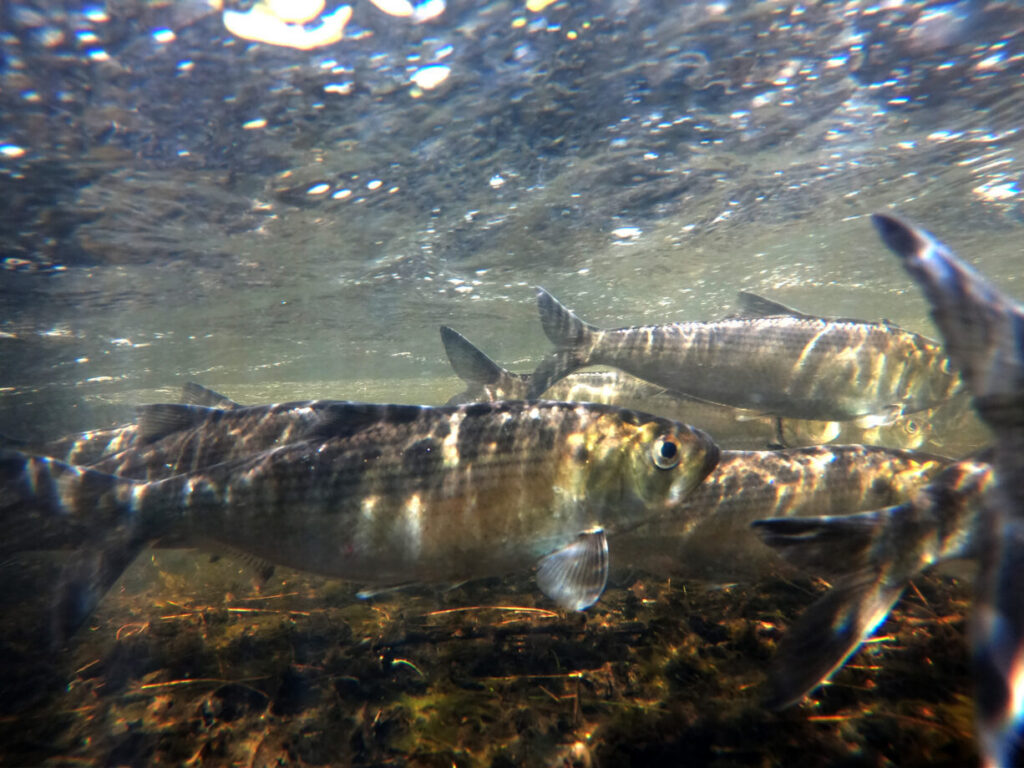
With the changing of the seasons, the beloved river herring once again made their successful annual upstream journey. From March 21st to June 13th, about 90 of our passionate volunteers spent more than 494 hours watching and waiting for the herring to make their way to their spring spawning locations. Remarkably, this year’s count at our South River site in particular yielded the highest number of fish passing this site in the past sixteen years, a total raw count of 2,627!
All this work could not have been done without the dedication and enthusiasm of our volunteers. Every season, they have been key to our ability to detect change in river herring populations, and the data they collect support population estimates that can give scientists and ecosystem managers alike a better clue into protecting these fish. We would like to extend a huge thank you to our volunteers for your part in making an impact!
2026 RIVER HERRING RAW DATA COUNTS AND POPULATION ESTIMATES
During the herring run each year, a raw count and a population estimate are both used to give an overall perspective on the river herring traveling through our local waters. The raw counts are the number of individual fish that are directly counted and recorded by volunteers. This means that the raw count depends on both the number of fish and the amount of time spent counting the fish, and therefore should not be taken at face value. Once volunteers complete the raw count, the numbers are sent to the Division of Marine Fisheries (MA DMF), which then assembles the data in an algorithm that estimates population size. It should also be noted that counts of “zero” do not necessarily mean that there are no herring in the system. Oftentimes, it just means that the fish are just hiding from predators in the natural environments available to them. When dams or fish ladders are present, they block or funnel fish into enclosed spaces where they are easily visible. In natural river conditions, it can often be very hard to see the fish that are unconstrained and pass freely. In other cases, the zeroes do reflect an impairment in the habitat, such as with dam removal projects or inadequate access to spawning and nursery habitats. Because of this, “zero” counts are just as valuable as any other data point, especially in understanding longer-term trends.
| Location | Raw count 2026 | Population estimate 2026 |
| Bound Brook | 0 | 0 |
| First Herring Brook | 0 | 0 |
| South River | 2,627 | 43,189 |
| Island Creek | 5 | 146 |
| Herring Brook | 5,561 | 93,657 |
INDIVIDUAL SITE DISCUSSION
Bound Brook – Scituate and Cohasset
Bound Brook is unique in that it is residually affected by the Hunters Pond dam, which was removed nine years ago. As with many of our dam removal projects in systems that had extirpated herring populations, we have seen them struggle to recover, as the only fish that enter the system are “scouts” exploring new streams. Still, there is confidence in more coming into the system, especially since herring that pass the Hunters Pond site have passage via two fish ladders to a large amount of habitat in the Aaron River Reservoir. With a renewed interest in reviving this herring population, we are hopeful that future efforts will eventually bring a rebound of passing herring.
First Herring Brook – Scituate
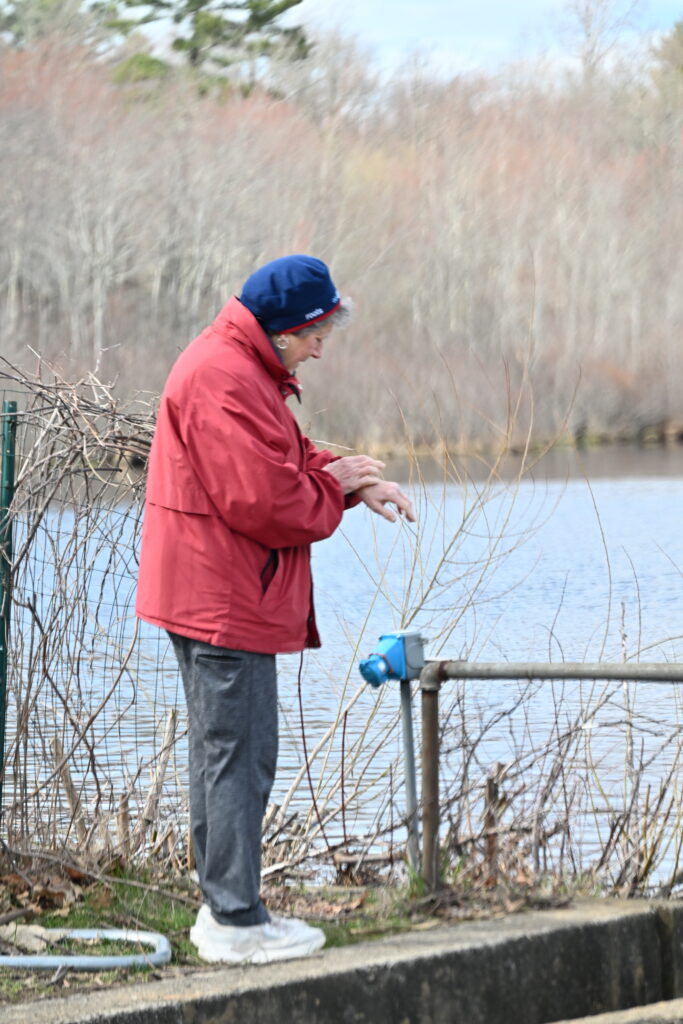
Since the restoration of the Old Oaken Bucket fish ladder in 2012, counts at First Herring Brook have remained stagnantly low. Unfortunately, First Herring Brook had a count of 0, which is down from the raw count of 16 from last year. We are hopeful that we can reach the raw count number of 132 that we achieved in 2018. Future expansion of the habitat through increasing access to the reservoir upstream may be able to improve conditions for herring to pass in the coming years.
South River – Marshfield
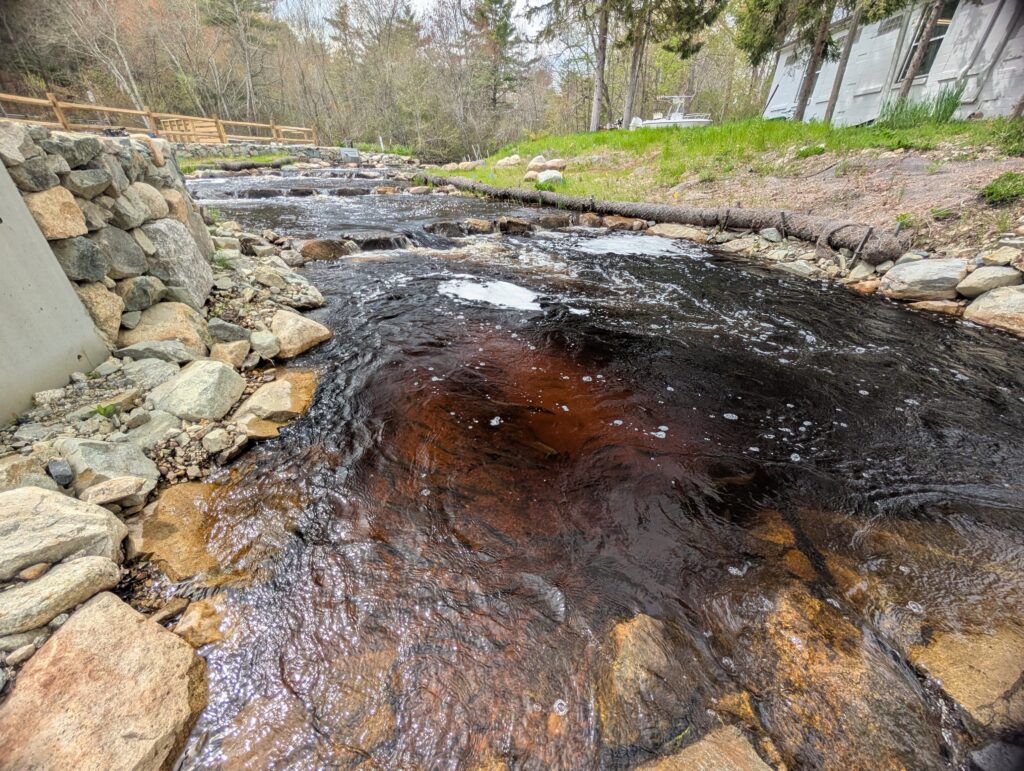
The South River has shown a remarkable increase in observed river herring, with a total raw count of 2,627 fish, which is a huge increase from our 2025 count of 257! This was the first season of counting that we had with the brand new river channel that is in place of the old Veterans Memorial Park dam in Marshfield. Astonishingly, the results of this project have already become observable — the number of observed herring passing through the bypass channel amounted to over ten times the amount of 2025. With the removal of the Veterans Park dam, we can now see the reconnecting of the South River from the ocean to the freshwater, all while restoring the riverine habitat.
Third Herring Brook – Norwell
For Third Herring Brook, we stopped conducting volunteer counts, but began conducting eDNA sampling that was funded by MIT Sea Grant. We will be sharing a full report of this effort in the next few months.
Island Creek – Duxbury
2026 was the first year that NSRWA helped support the volunteer counts at the fish ladder in Island Creek, Duxbury. For the past few years, this site has been stocked with herring from Herring Brook in Pembroke. April was the peak time for herring counts at Island Creek as all of the raw counts that we received happened between April 15th to the 25th. We are hoping these numbers continue to grow as we continually make our yearly volunteer counts at Island Creek.
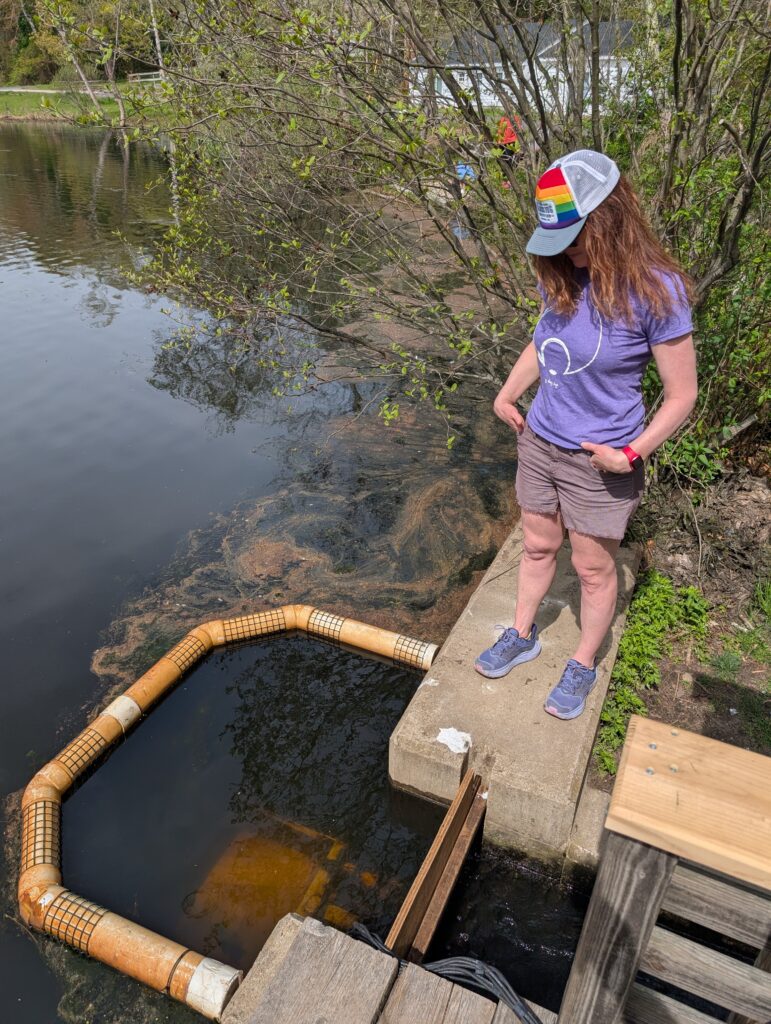
Herring Brook – Pembroke
Each year, Herring Brook yields our most populous herring population, with this year being no exception! Volunteers counted a total of 5,561 herring passing through, an unfortunate 64% decrease since 2025 with this being our lowest count since 2022. Despite these down year results, this site continues to be one of the largest runs in the state and is an inspiring place to watch the spring migration.

Additionally, MA DMF operates an electronic counting device on Herring Brook, which is able to count every fish that passes by at all times of the day. This data is considered the “true population” and is an excellent complement to the estimates we get from our volunteer counts.
Overall, this year was incredibly successful both in turnout of herring and volunteers, and we are looking forward to continuing this momentum in the coming years. Thank you again to all who participated – we hope you will join us in 2027!