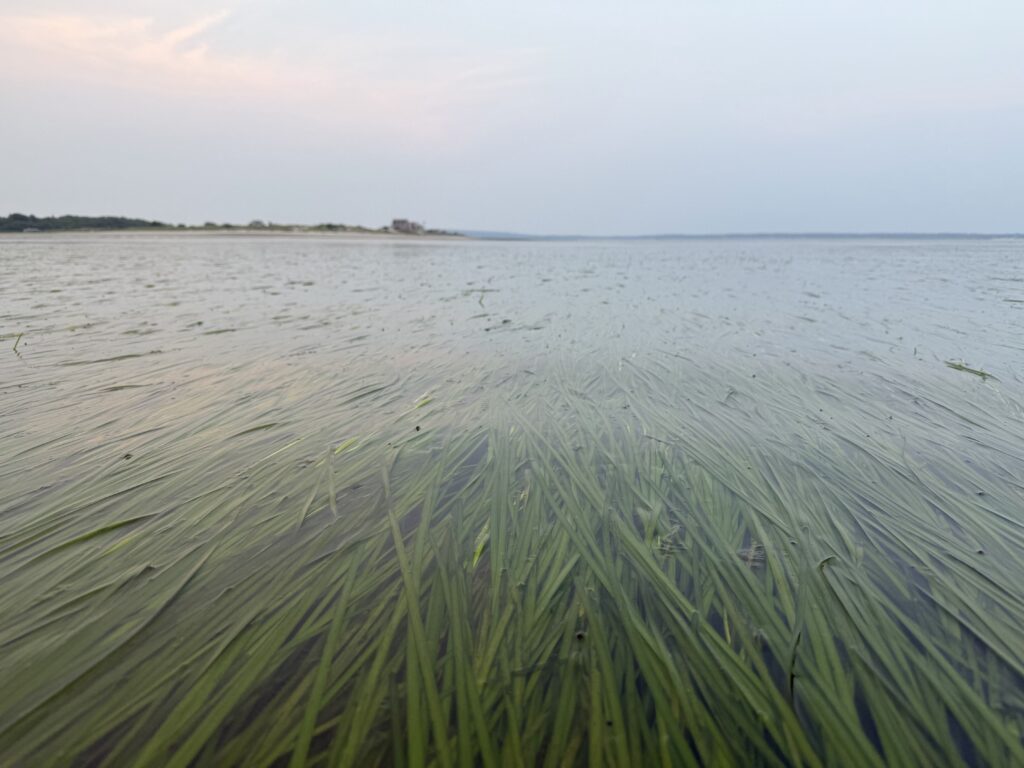
Eelgrass meadows provide multiple ecosystem benefits in estuarine systems: they support biodiversity, attenuate wave energy, stabilize and oxygenate sediments, sequester carbon and nutrients, and filter the water column. Eelgrass meadows and smaller patches create important coastal habitat, providing shelter and forage for many commercially important marine fish species. The Massachusetts Department of Environmental Protection (DEP) uses eelgrass extent and condition as an aquatic health indicator under the Clean Water Act since it is acutely sensitive to anthropogenic and environmental stressors such as water quality impairment, physical damage, turbidity and rising sea temperatures. Similarly, MassBays National Estuary Partnership (MassBays) utilizes eelgrass coverage as an indicator of ecosystem integrity, and MassBays’ Comprehensive Conservation and Management Plan focuses on eelgrass meadows as a vital habitat within our Estuary of National Significance ecosystem and calls for expanded efforts to restore eelgrass beds to their 1995 extent.
Eelgrass extent is declining throughout its range, including in Massachusetts where we have lost approximately 50% (~19,000 acres) of aerial coverage since the 1990s. While poor water quality has been considered the main driver of historic eelgrass declines, opportunities for recovery in rehabilitated estuaries exist and will likely be increasing in the future as a result of (1) existing improvements to waste-water treatment facilities, (2) plans to continue to improve waste-water treatment facilities across the state, and (3) proposals to further tighten state regulations related to estuarine nitrogen loading. While these initiatives have led to water quality improvements, areas that historically supported eelgrass have not revegetated due to factors such as loss of nearby seed supply and habitat fragmentation. These areas are prime targets for restoration to reverse declining trends. Eelgrass loss contributes to a negative feedback loop where water clarity and quality declines, leading to more eelgrass loss. Eelgrass restoration efforts can kick-start a positive feedback lack loop of improving conditions of increased water quality and natural eelgrass growth.
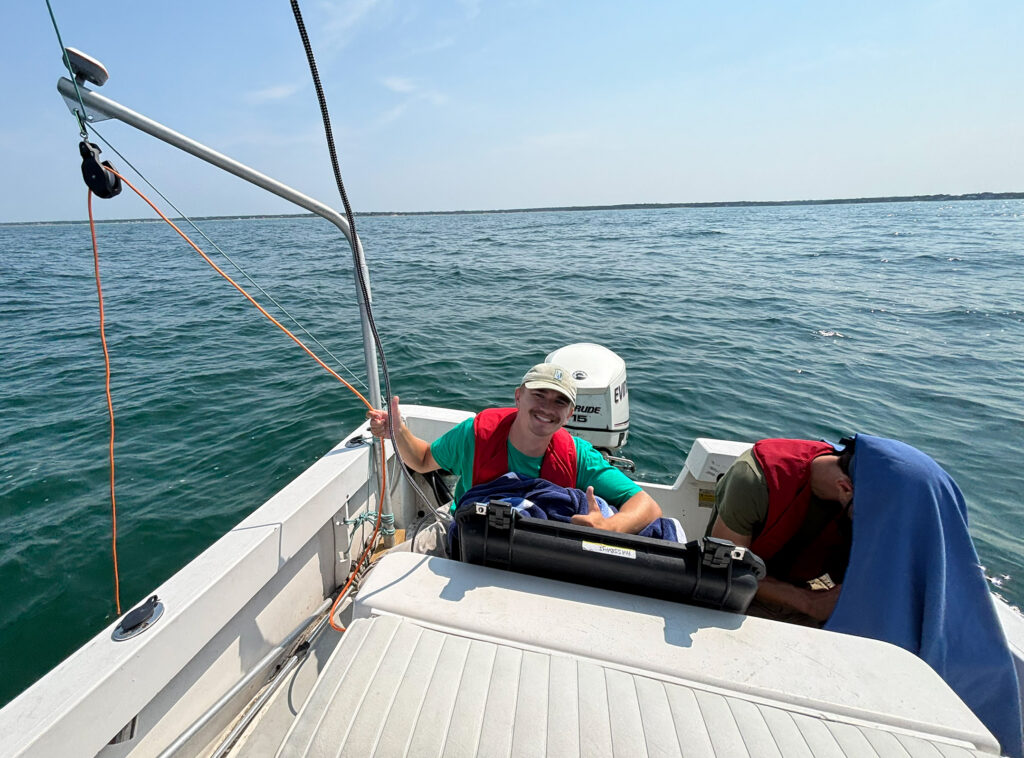
Since 2017 NSRWA, MassBays, MA DMF, and MA DEP have launched a targeted sampling program to evaluate eelgrass health and contributing factors in the decline. We collect this data using a drop camera to measure eelgrass percent cover at sites throughout the bays. This work continued in 2026 with sampling occurring on five days between July 17 and August 25th. The work was conducted by a mix of staff, interns, and volunteers. An extra special thanks goes out to our four amazing boat captains who volunteered their time, boats, and skills to make these surveys safe, efficient, and fun. We literally couldn’t have done it without you! A graduate student at UMass Boston has been working up an analysis on the past 9 years of data collection. Meanwhile, MA DEP conducted their aerial photography surveys over our area in 2026. These flights take place on a 5-year cycle. These surveys are supported by boat-based ground truthing conducted by MassBays. The MA DEP data should be available in 2027.
While the ongoing monitoring continues, in 2026 we also launched a new project to restore these critical habitats, “Seeding the future: Restoring eelgrass and building community engagement across the MassBays NEP.” The project involves conducting monitoring and planting eelgrass (Zostera marina) at 4-8 sites across coastal Massachusetts using seed-based restoration methods. Each site is 0.25 to 1 acre in size and will be planted over the course of four events which will engage community volunteers and local partners. Total project-wide restored area across all sites will be 4 acres. A variety of seeding techniques will be employed at each site to identify the best performers for use in supplemental restorations. Monitoring will be conducted before, during and after restoration and will include continuous light and temperature from in situ loggers, and eelgrass biometrics including percent cover, shoot counts, distribution and reproductive status from snorkel-based surveys. The project timeline is from October 2025-December 2027. It will be directed by MassBays. with field and lab tasks conducted by community-based, academic, and agency partners, and project guidance from a multidisciplinary Steering Committee. Funding for the project is provided by Restore America’s Estuaries through an NEP Watershed grant.
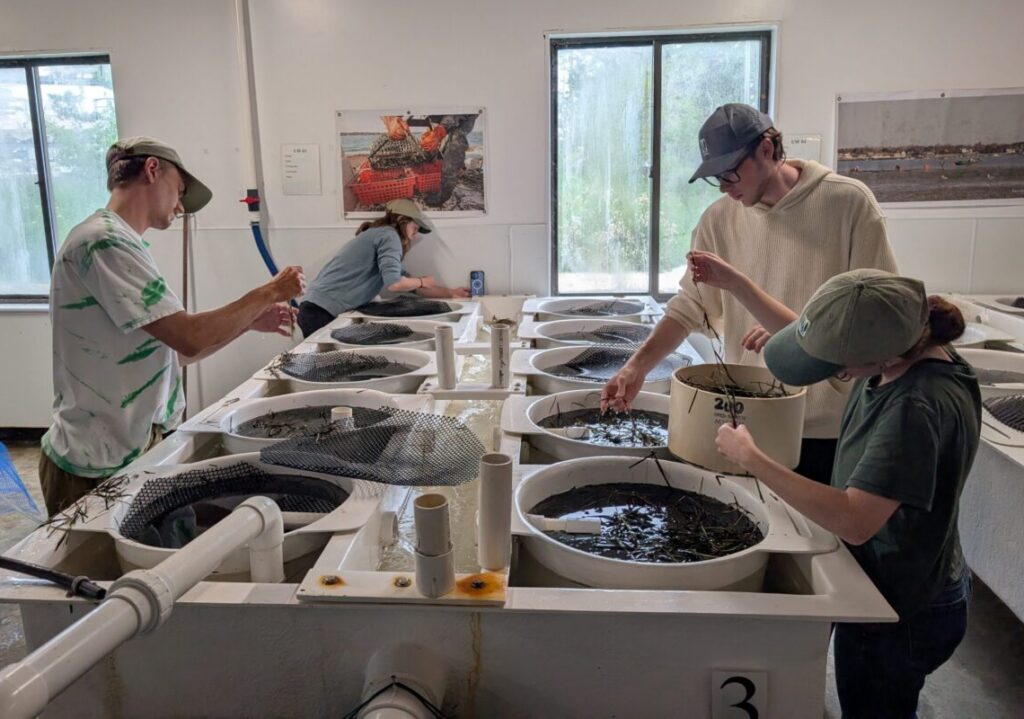
Locally, the restoration is being led by NSRWA at sites in Duxbury and Plymouth. Other project sites include Gloucester, Beverly, Marblehead, and Nahant. For the south shore sites local partnership is what has made it all possible. Island Creek Oysters and the Duxbury Bay Maritime School (DBMS) have provided infrastructure, time, and labor that is truly invaluable to making this work happen. Island Creek allowed us the use of hatchery space to maintain approximately 7,500 reproductive eelgrass shoots as nearly 300,000 seeds matured on the shoots. For two months at the Island Creek Oyster hatchery our team of NSRWA staff, interns, and volunteers worked seven days a week, measuring water quality, cleaning tanks and screens, changing out ~1,500 gallons daily of fresh seawater, and carefully isolating eelgrass seeds from their shoots.
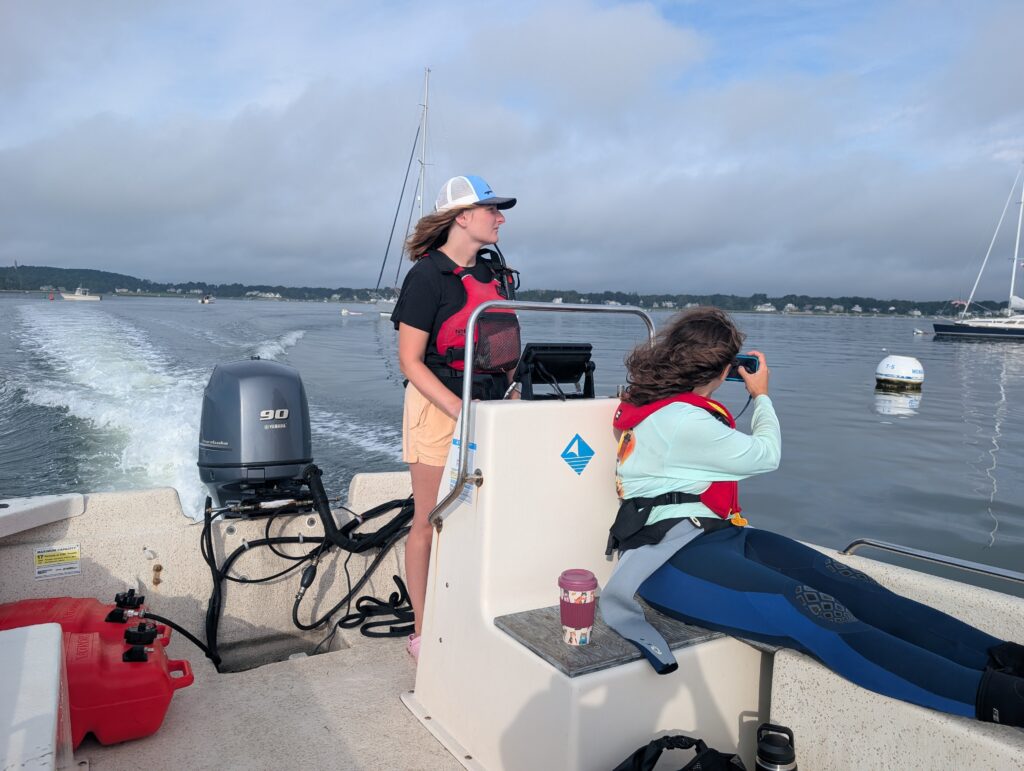
On the water, DBMS routinely brought us to our donor and planting sites throughout the year. Their location right on the bay, perfect work boats, and great captains (shout-out to Kenzie!) made access to the water so efficient and successful.
For this project we are testing three planting techniques, each that represent tradeoffs of materials, labor, seed success, and scalability. These techniques are:
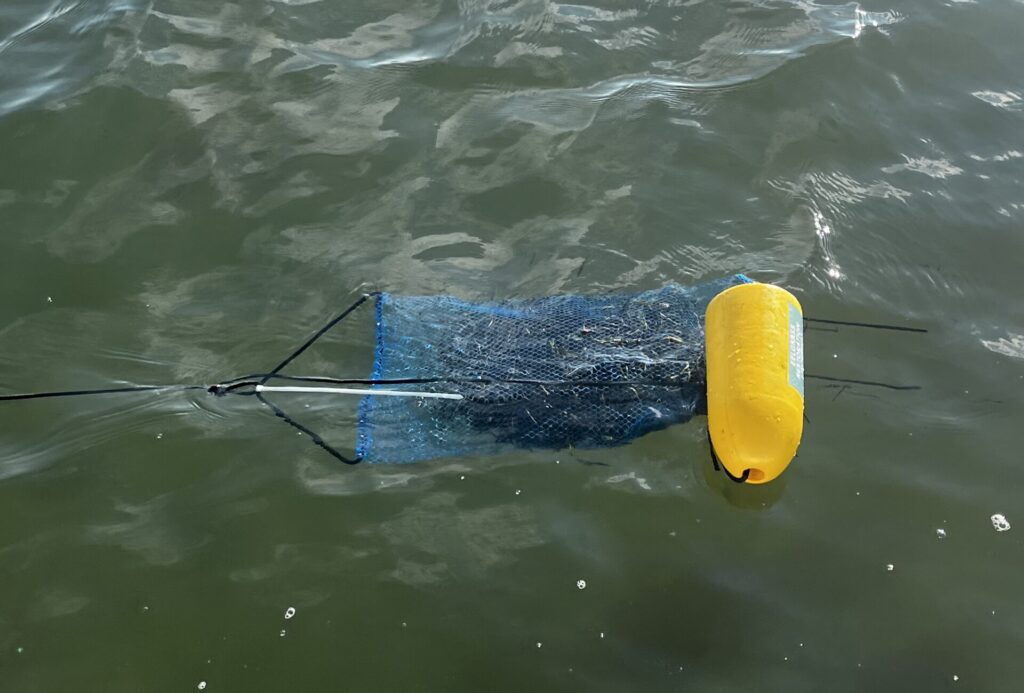
- The “Buoy Deployed Seeding” (BuDS) method involves placing flowering shoots in mesh bags that are suspended over the restoration site and secured to the seafloor by temporary anchors. Each “planting unit” consists of a block, rope, and floating bag. As the tides and currents shift, the bag travels around the anchor line, distributing seeds across a large swath of seafloor as they ripen and drop from the plant. This method has significant advantages in terms of labor. Rather than carefully managing the shoots and seeds in the hatchery, the shoots go straight into the bags and are most hands-off until they are retrieved several weeks later. Tradeoffs include significantly more materials and a lager footprint on the water surface while the systems are deployed.
-
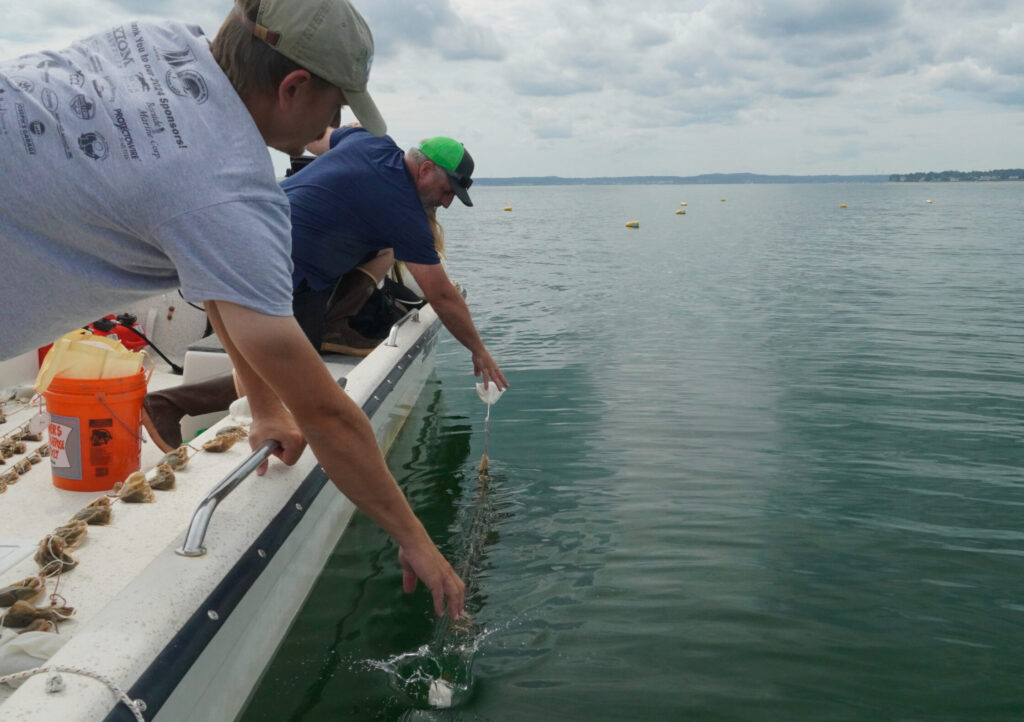
Deploying ‘teabag’ strings of eelgrass seed from the DBMS skiff. (Photo by Sam Butcher) The “tea bag” method involves putting mature seed into small biodegradable bags that are anchored to the seafloor. At the south shore sites we are testing a fully biodegradable system that consists of teabags filled with a scoop of local sediment and ~50-75 seeds each. The bags are tied to a length of jute twine which is anchored at each end to small rocks in degradable cloth bags. This method puts the seeds directly on the seafloor in a pre-planned pattern, while protecting them from currents and grazers. The tradeoff is additional materials and the intensive labor involved with filling hundreds and hundreds of individual bags.
-
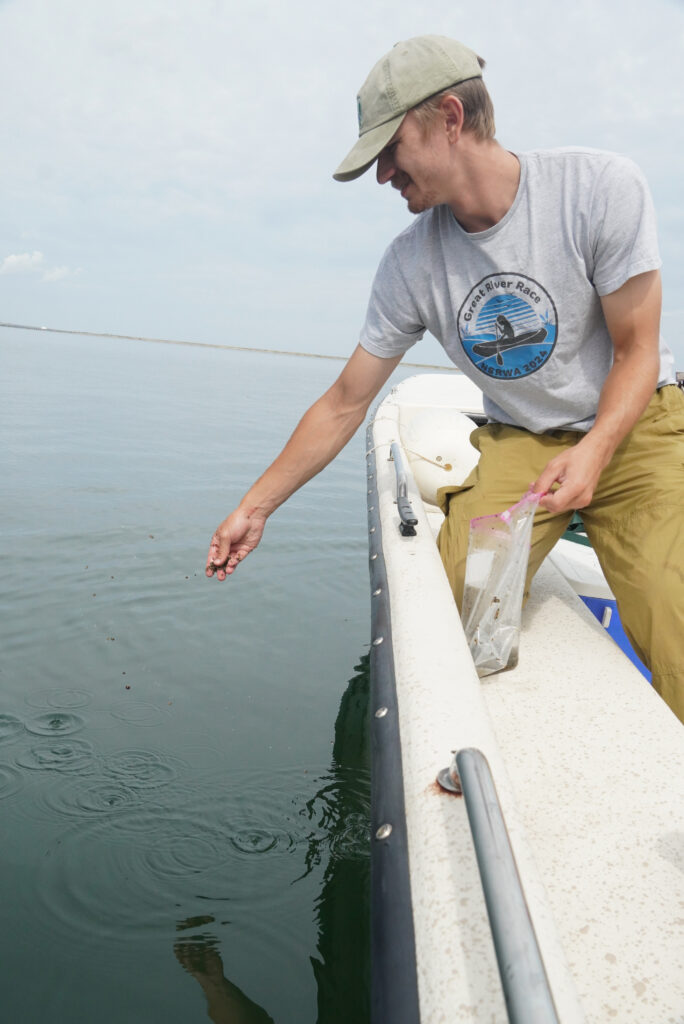
Broadcasting eelgrass seed. (Photo by Sam Butcher) The “broadcast” method is how you might plant your lawn and how most of the oysters in Duxbury are grown. For the broadcast, we take mature seeds from the hatchery and spread them evenly across the site by tossing them from the boat. This method requires no additional materials, minimal labor, and is therefore highly scalable. The tradeoff is that the unprotected seed is vulnerable to currents, grazers, and other impacts.We won’t see results from these methods until next spring. At that stage we will be able to evaluate the success of each method and make decisions about where to focus our efforts in 2027. By project end, the goal is to identify sites and methods where restoration was successful and additional full-scale planting efforts are warranted. Restoration is considered successful if > 25% of planting units deployed at a site produce at least some germinated shoots that persist through their first full summer. Such success indicates the site and method are an appropriate match for further efforts.