By Interns Ryan Hughes and Avery Sands
This year, MassBays and NSRWA completed their eighteenth year of horseshoe crab monitoring in Duxbury. Duxbury is one of sixteen sites across the state that are part of the Massachusetts Horseshoe Crab Spawning Surveys, managed by the Massachusetts Division of Marine Fisheries (DMF). In April of 2024, DMF introduced a new regulation that prohibits the harvest of horseshoe crabs during their spawning season in all Massachusetts waters, from April 15 to June 7. This regulation is critical to protecting horseshoe crabs during their most vulnerable life stage, and may lead to a population rebound.
Horseshoe crabs are both fascinating to observe and essential to our local ecology. Their activity mixes up sediment and adds vital oxygen back into the mudflats. Horseshoe crab eggs are even a key food source for many migrating shorebirds, like the ruddy turnstone and the threatened red knot.

Horseshoe crabs are also important for humans, which primarily drives their harvesting. They are used as bait for several fisheries, including eel, conch, and whelk. Most notably, the iconic blue blood from horseshoe crabs is used to test for bacterial contamination in vaccines. By documenting horseshoe crab population trends, citizen science programs across the state provide valuable data that helps DMF manage, conserve, and protect this charismatic species.
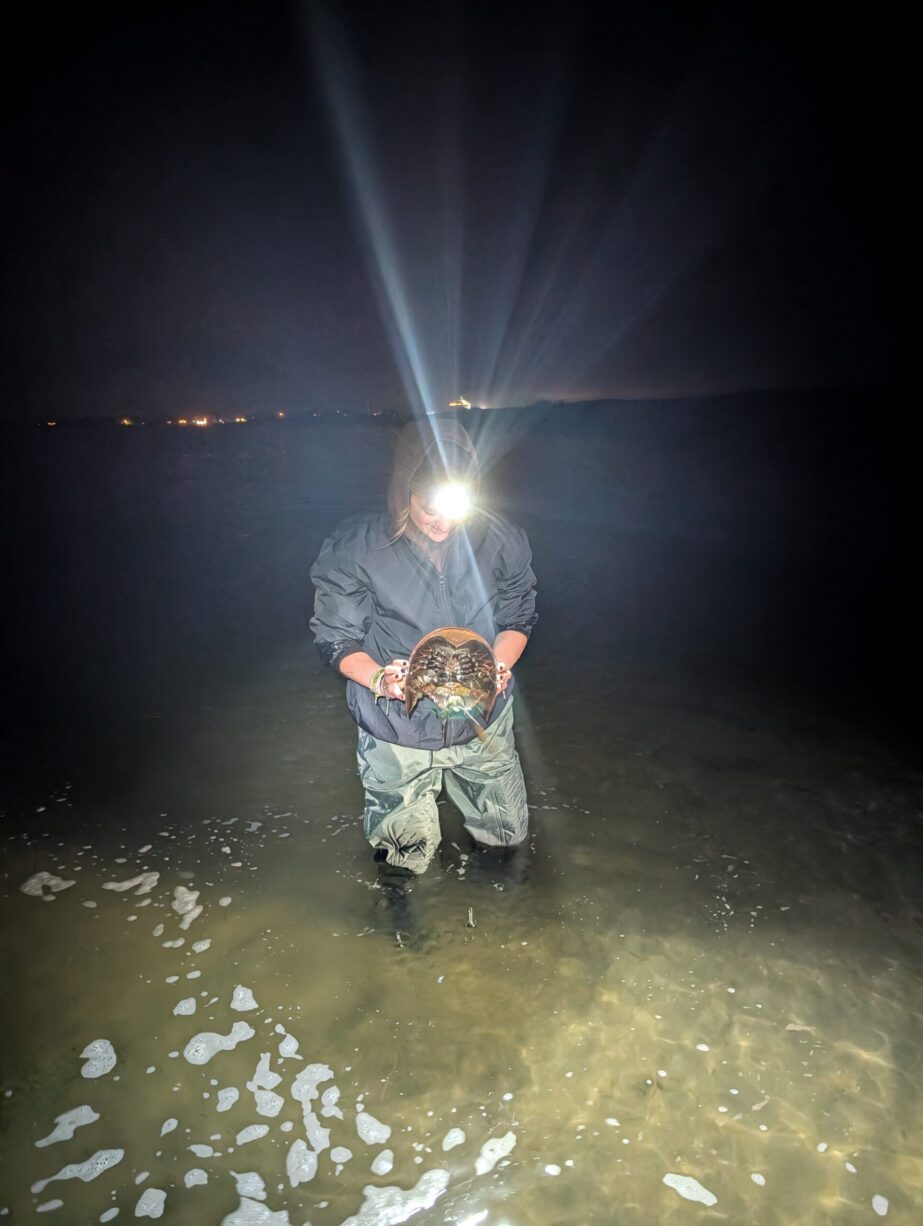
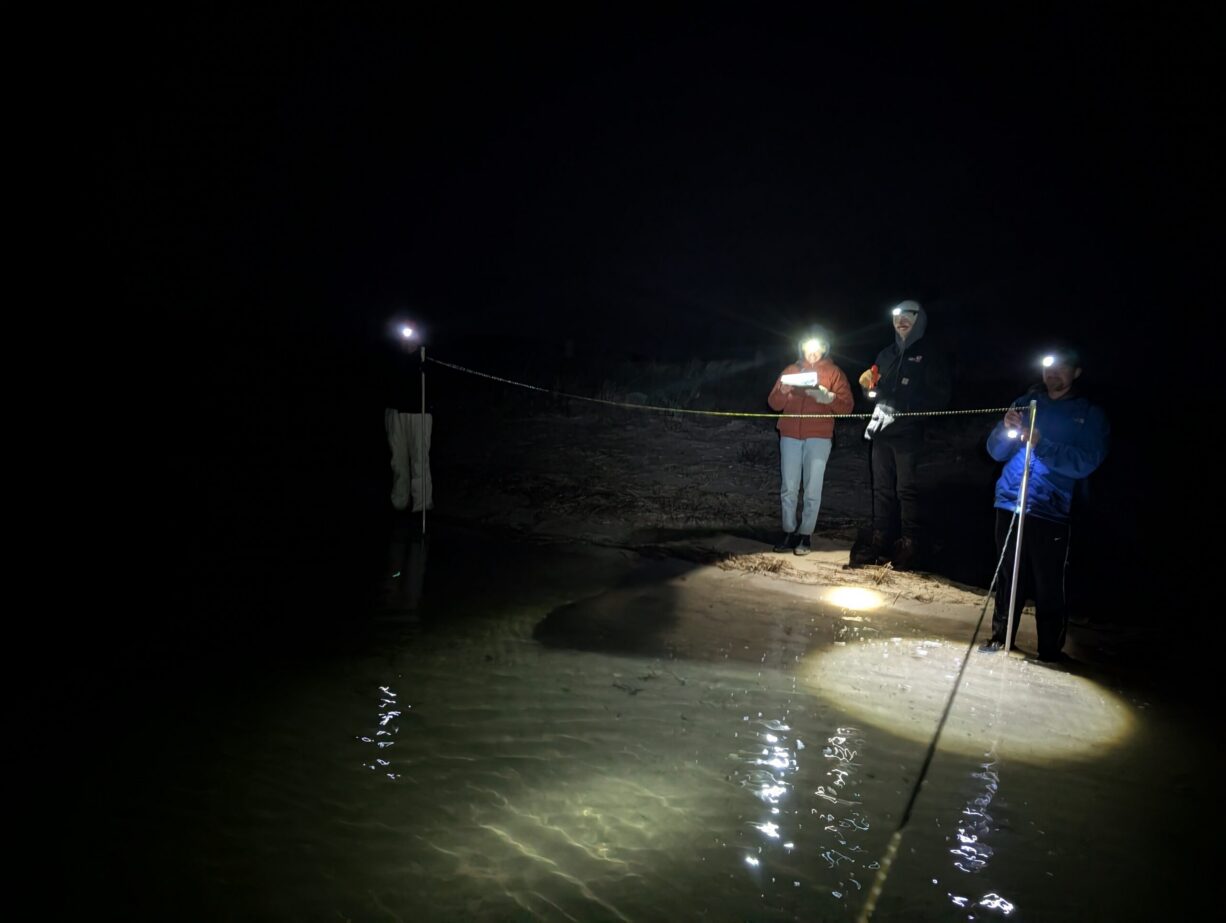
For this year’s Duxbury surveys, the NSRWA and MassBays put out a call for citizen science volunteers in April. With help from partner organizations like the Duxbury Beach Reservation, over 60 volunteers were recruited. After receiving training, these dedicated citizen scientists conducted 30 surveys from April 29th to July 1st, half during the day and half at night. These surveys are specifically selected to occur on high tides around the new and full moons. In fact, about half the surveys are conducted in the middle of the night! This makes for some incredibly unique surveying experiences under moonlit or moonless nights on the beach.
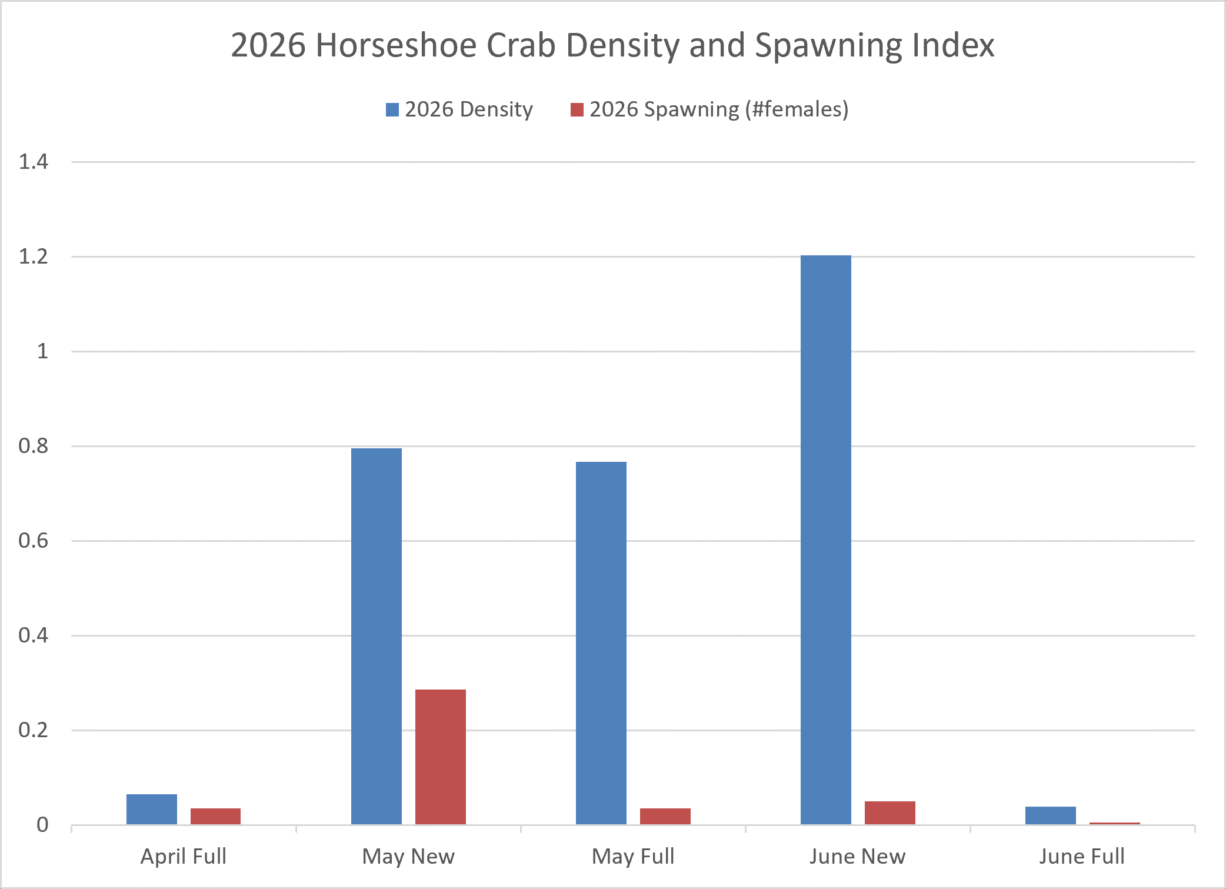
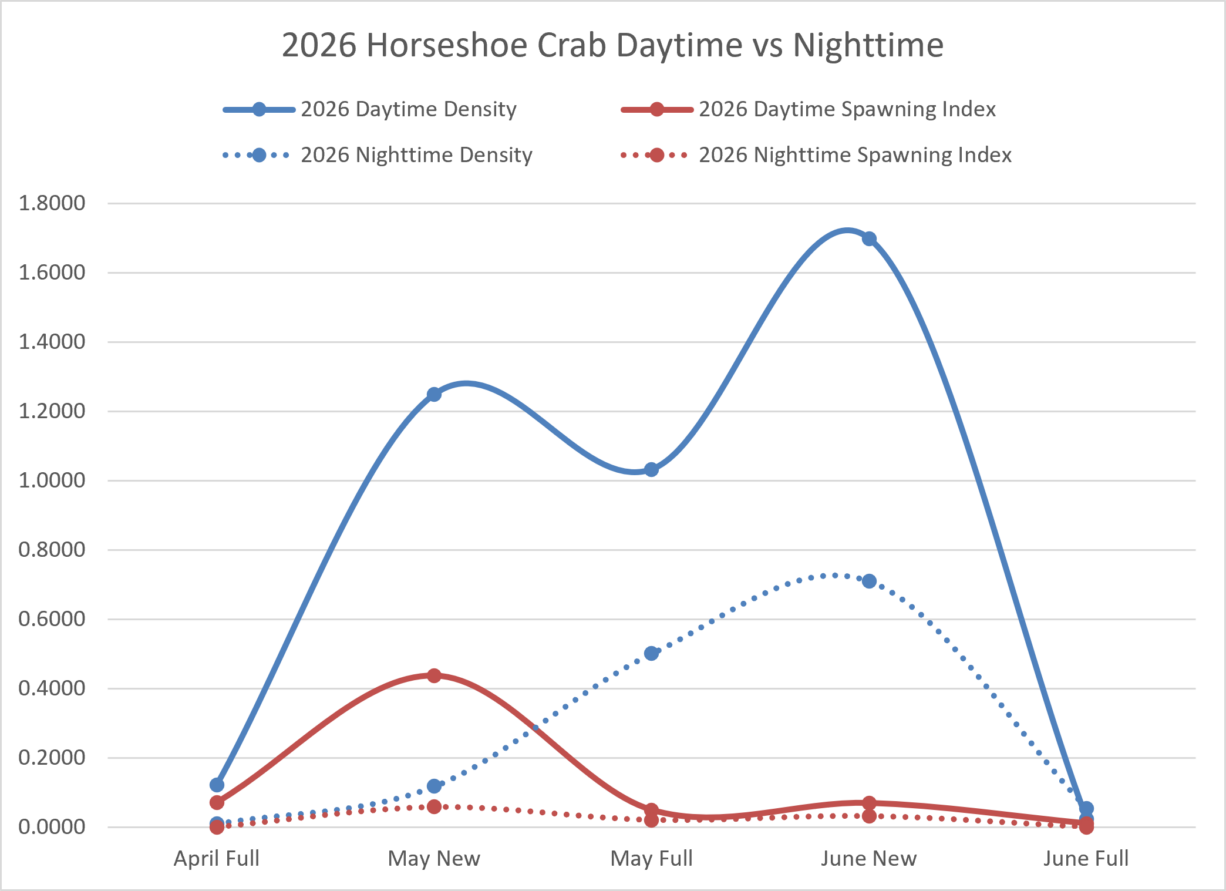
In 2026, the total density of crabs (crabs/m^2) and the spawning index (females/m^2) both peaked during the sixth daytime survey on May 18th. There were a total of 34 females and 68 males observed during the May 18th survey! On the June 12th morning survey, it was reported that there was a peak number of males at 90 during this survey with only 1 female, showing just how variable and different these numbers can look at any given time. On average, the peak density of horseshoe crabs occurred on the June new moon surveys where we saw an average of about 1.2 crabs/m^2 (Fig. 1). The average number of spawning females peaked during the May new moon surveys at around 0.286 females/m^2/ (Fig. 1).
During these daytime surveys, it was much more common to observe both male and female horseshoe crabs than it was to observe them during the nighttime surveys (Fig. 2). Males dominated both day and nighttime surveys, but females showed a much higher presence compared to other female sightings during the May new moon daytime surveys (Fig. 2).
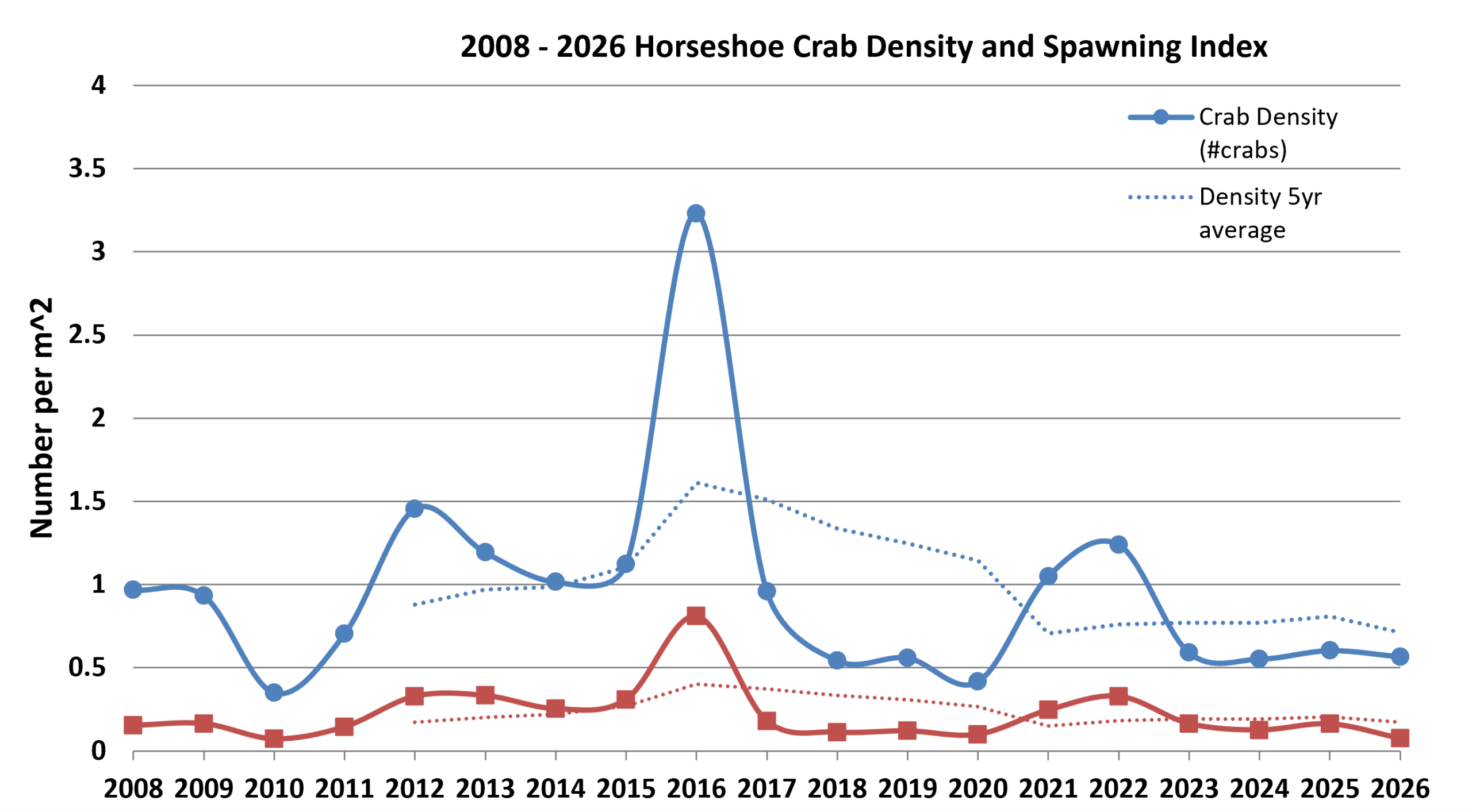
The 2026 crab density (0.56 crabs/m^2) was lower than 2025’s crab density (0.60 crabs/m^2) and barely higher than 2024’s density (0.55 crabs/m^2) (Fig. 3). The 5-year rolling density average still remains higher than the numbers recorded this year, thanks in part to 2022’s increased density count (Fig. 3). The observed spawning index for 2026 (0.0755 females/m^2) appears to be at its lowest point since 2010 when there was about 0.07 females/m^2. The 2026 spawning index is also lower than the 5-year rolling spawning index (Fig. 3). As with previous years, we anticipate that it may take several years before any DMF regulations result in any changes to the local horseshoe crab population.
Thank you to our partners at the Duxbury Beach Reservation! Also, thank you to all of our citizen science volunteers for their dedication to our horseshoe crab monitoring program, even through inclement weather and late night surveys. Be sure to look out for our 2027 call for volunteers so you can become a citizen scientist!