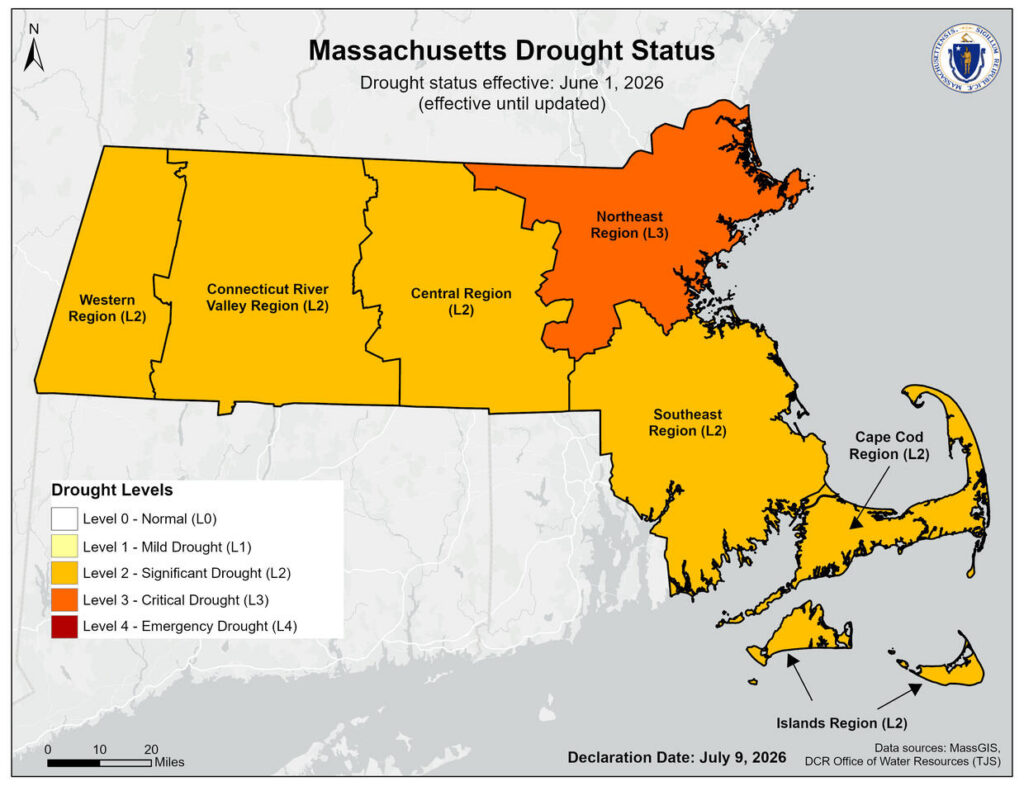
 Living in New England, we are used to unpredictable weather, but this year’s persistent shift between Mild and Significant Drought conditions is pushing local water supplies to the limit. While the South Shore saw a welcome downpour on Tuesday – dumping anywhere from just over 1” to 2.5” of rain across the region – it simply isn’t enough. One single storm cannot erase a months-long deficit in our groundwater levels. For more on the connection between drought, rain and groundwater, check out this short video created by NSRWA’s talented summer interns.
When we talk about drought, we typically focus on dried-up riverbeds and mandatory outdoor watering restrictions. But behind the scenes, local water suppliers are working overtime to manage the strain on local infrastructure and water supply. For the last few months, our groundwater levels have remained stubbornly low, making this a unique and challenging year for water suppliers in our region.
We reached out to local water departments to find out what challenges they are facing and what they need from residents right now:
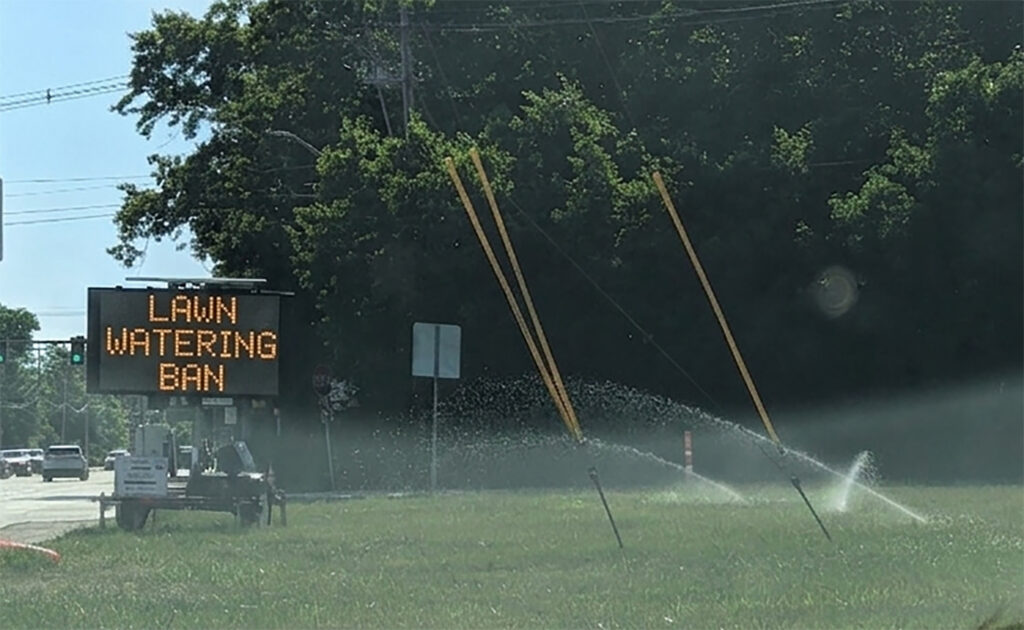 Sign up for Town emails and alerts. This is the best way to stay informed and respond quickly when irrigation bans change. Check your local town hall website to subscribe to your news.
Outdoor water use is the issue. In at least one South Shore town, average daily water use has doubled since the cooler months. Others are seeing usage increase by 50%. While some of this is due to seasonal population changes, the vast majority is irrigation and lawn watering. All suppliers noted that residents are still watering, requiring additional town resources for enforcement and fines. On a more positive note, one supplier noted that demand has decreased due to significant efforts of residents to follow the increased outdoor watering restrictions. In his words, this really is the classic case of “if everyone does their part individually the collective effect can be significant.”
Conservation is key. Water usage typically spikes around the 4th of July but we often experience our driest conditions in August. In order to prepare for what may be our most critical months, small shifts in behavior can lead to thousands of gallons saved across the South Shore:
 Turn off all inground irrigation systems. Don’t just pause them from week to week.
- Water high-value plants early in the morning or later in the day to minimize evaporation.
- Reuse water from the kitchen (blanching veggies, boiling pasta) to fill watering cans
- Follow NSRWA’s best mowing tips
- Instead of hosing down driveways, sidewalks or decks, use a broom or leaf blower.
- Bring vehicles to a commercial car wash instead of washing by hand
For more tips on water conservation, check out NSRWA’s Water Conservation page and the state’s Water Conservation Toolkit.